Early in the Civil War, Escaped Slaves Found Safe Refuge at Fortress Monroe, Virginia
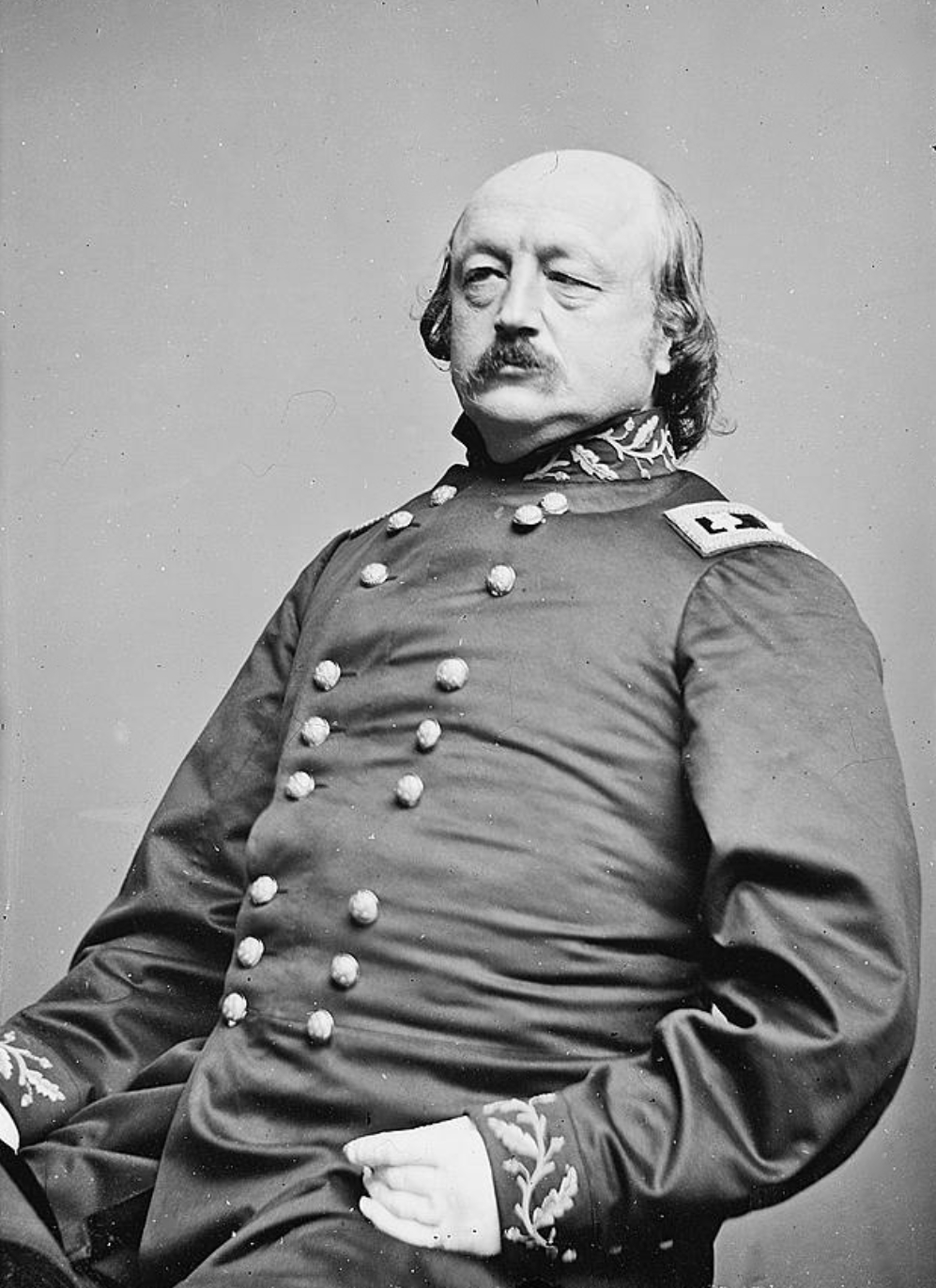
Maj. Gen. Benjamin Butler
On May 22nd, 1861, Major General Benjamin Butler arrived at and assumed command of Fort Monroe (or as it was more commonly known at that time, Fortress Monroe), a strategically important U.S. fort guarding the entrance to Hampton Roads at Old Point Comfort, Virginia. It would not be long before Butler had his first command challenge.
On the night of May 23rd, three slaves named Frank Baker, Shepard Mallory, and James Townsend, grabbed a small boat and rowed across the James River to Fortress Monroe. They were seeking freedom but did not know how they would be received or what their fate would be. Butler questioned the men, who told him they had been put to work building artillery emplacements along the river.
The general had a situation on his hands. The Fugitive Slave Act of 1850 was a controversial law that compelled all escaped or fugitive slaves be returned to their masters, even if they had escaped to free states. Butler did not want to return the three; he assumed they would be punished for escaping and would continue to be forced to supply labor to the secessionists if they were sent back. Such a move would also be unpopular with a substantial portion of the men under his command who were abolitionists.
Butler had to come up with a solution quickly, because it wasn’t long before Major John Cary of the Virginia Militia approached the fort under a flag of truce. He represented Colonel Charles Mallory, who owned the three escapees. Mallory wanted them back, and Cary reminded Butler about his obligations under the Fugitive Slave Act. Before being appointed as a general, Butler had been a politician and lawyer in Massachusetts, and he figured out a novel workaround to the law.
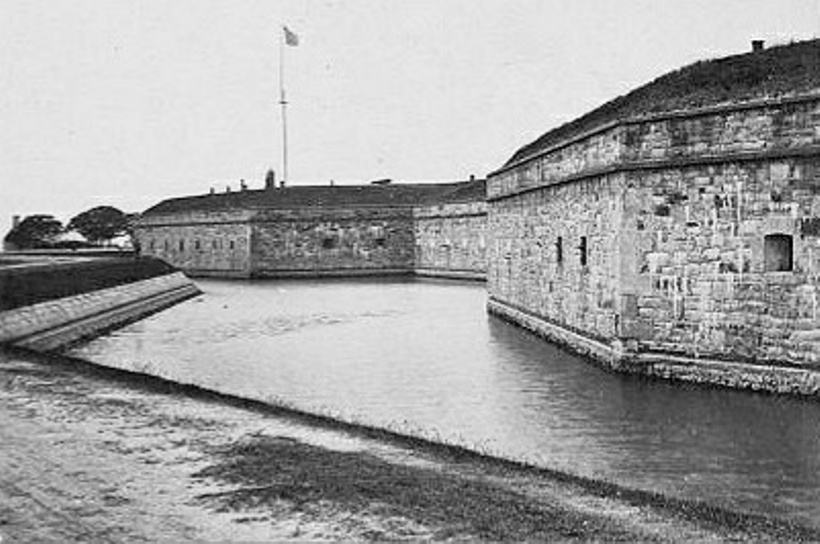
Fortress Monroe, Virginia, in 1861
On the same day that Baker, Townsend, and Mallory were making their escape, the voters of Virginia officially approved the secession of their state from the Union (although unofficial acts in support of succession had been going on for some time). Butler told Cary that the fugitive slave act did not affect a foreign country, which Virginia claimed to be, and that she must reckon it one of the infelicities of her position Since the Federal laws and constitution did not apply, he was under no obligation to return the men to Virginia and slavery. They had been used to build artillery batteries to be used against the United States, and Butler was within military law in wartime to seize any enemy assets. The new Confederacy was heavily dependent on slave labor for building military infrastructure as well as for agriculture. Butler told Cary that he would hold the men as contraband of war.
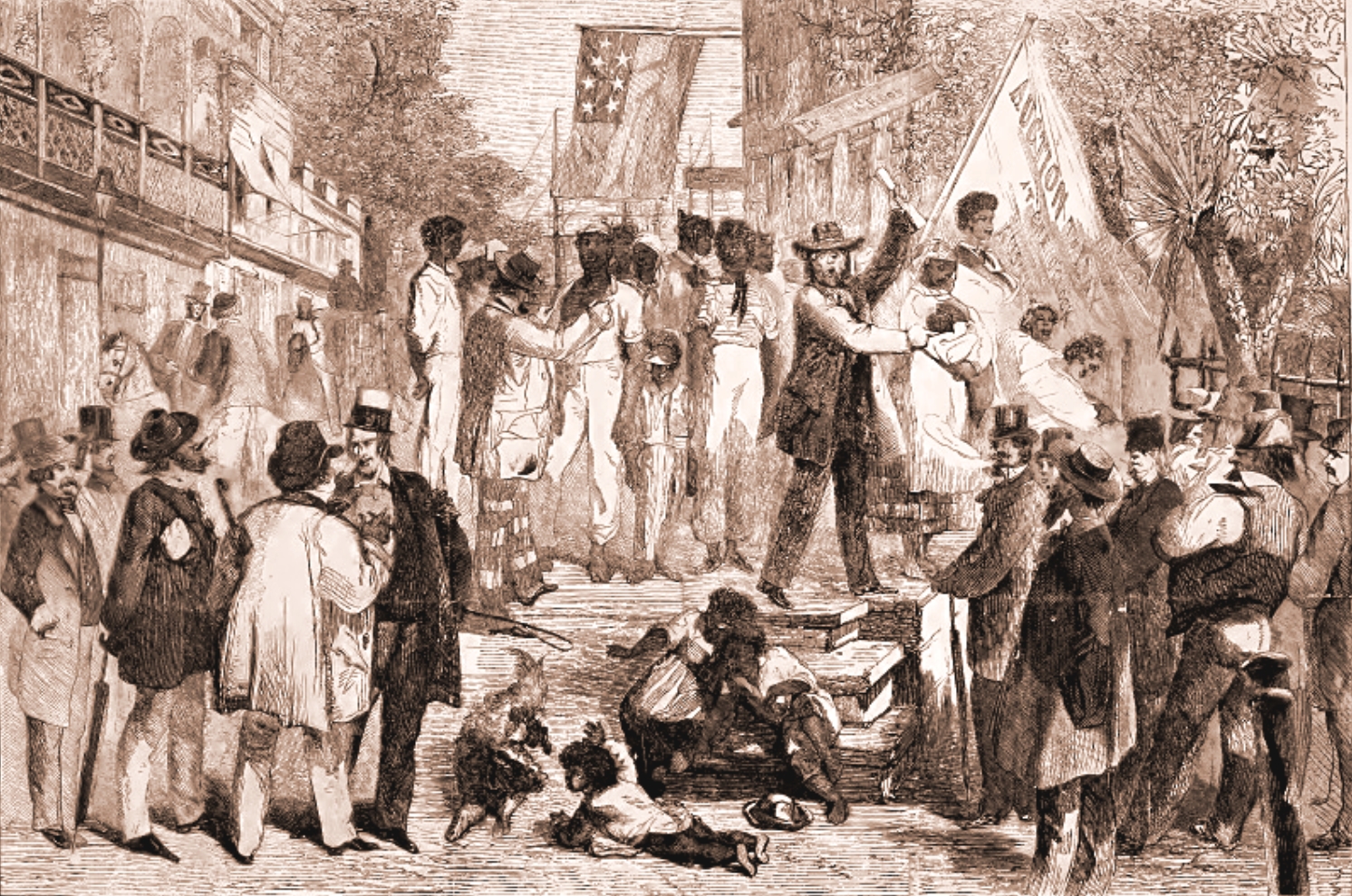
Slave Auction in the South from Harper’s Weekly July 13, 1861
Cary left empty handed. Butler wrote a report to Lieutenant General Winfield Scott, general in chief, on the overall situation at Fortress Monroe including his action and reasoning regarding the escaped slaves. He added that he could employ them in the service of the war effort. Butler asked Shall they [Rebels] be allowed the use of this property against the United States, and we not be allowed its use in aid of the United States? Butler didn’t know if the Lincoln Administration would accept his actions, but he gave it his best shot.
Before Scott and the administration received the report, additional escaped slaves began to arrive at Fortress Monroe, and not just those working on artillery batteries. Men, women, children, and old people arrived constantly. Many carried valuable intelligence about Rebel military preparations and strength. When word got out to the press and public of the situation, Butler’s term contraband entered the lexicon of the war.
On May 30th, Secretary of War Simon Cameron sent Butler the Administration s reply:
Sir: Your action in respect to the negroes who came within your lines from the service of the rebels is approved…
You will employ such persons in the services to which they may be best adapted, keeping an account of the labor by them performed, of the value of it, and of the expense of their maintenance. The question of their final disposition will be reserved for future determination.
Butler’s plan was approved, and by July, the number of slaves seeking refuge at Fortress Monroe was somewhere around 1000. In the general s mind, it was time to decide the legal status of the refugees. Butler wrote to the War Department that while he regarded them as contraband of war, he asked if they were considered anyone s property, and if so, whose? Their slave owning masters had abandoned them, so who, if anyone, owned them? Butler and the army did not own them, and didn’t want to own them, so were they property at all? Or were they now free?
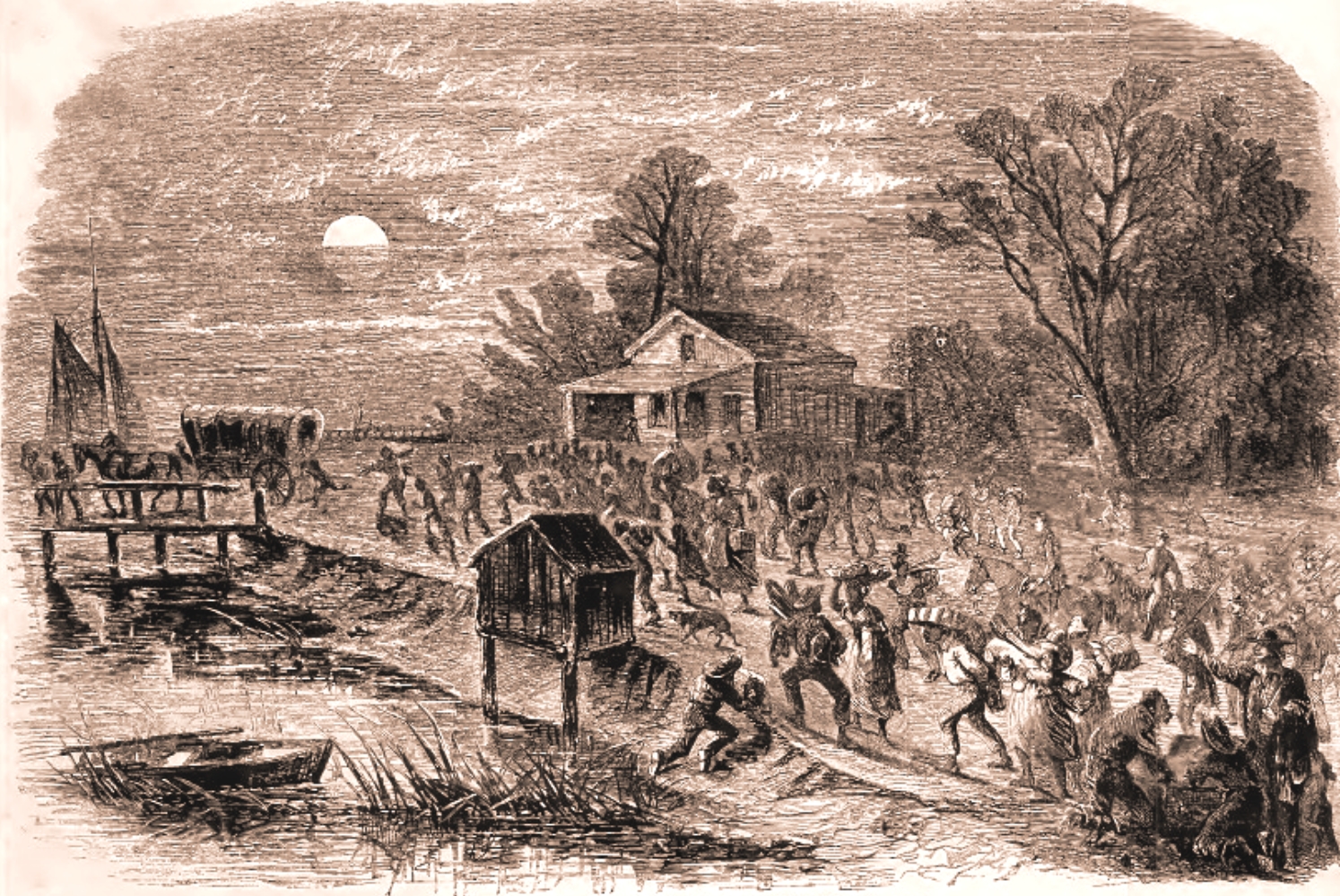
Stampede of Slaves from Hampton to Fortress Monroe, Harper’s Weekly August 17, 1861
Congress had recently affirmed that slaves employed in actions against the United States were no longer slaves, and Cameron agreed that Butler could continue to receive them and employ them, and did not have to return them to slavery. This was a small step towards changing the Civil War s objective on the Union side from solely holding the Union together to emancipation for at least some slaves. Lincoln would issue the Emancipation Proclamation in the Fall of 1862, freeing slaves in areas under Confederate control, effective January 1st, 1863. The 13th Amendment to the Constitution, passed by Congress in January 1865 and ratified in December, made slavery illegal nationwide, ending a practice that had begun in the Virginia Colony in 1619.
Sources:
Battle Cry of Freedom: The Civil War Era by James McPherson
The Coming Fury by Bruce Catton
1861: The Civil War Awakening by Adam Goodheart
Official Records of the Union and Confederate Armies in the War of the Rebellion Series I, Volume 2 and Series III Volume 1.
Amazon affiliate links: We may earn a small commission from purchases made from Amazon.com links at no cost to our visitors. For more info, please read our affiliate disclosure.


