Anna Morris Holstein’s Recollections of Nursing in a Field Hospital After the Battle of Antietam
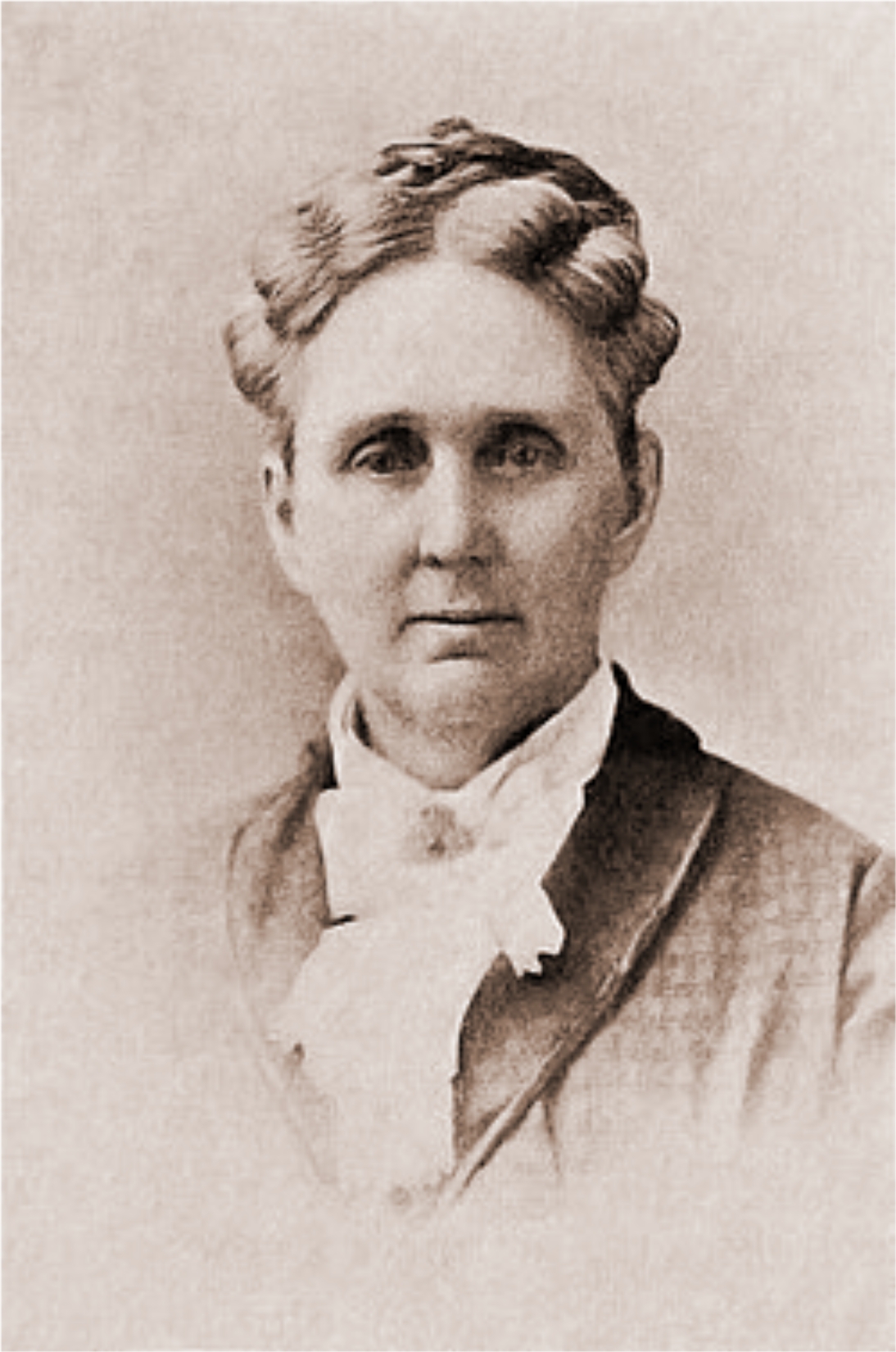
Anna Morris Holstein
Anna Morris Holstein and her husband William H. Holstein were a well to do couple living in Pennsylvania when the Civil War began. As the war proceeded, the two felt they needed to make a contribution of some kind to the war effort. In September 1862, just after the Battle of Antietam with its tens of thousands of casualties, Anna had declined an invitation to serve a 10 day stint tending to the wounded with some local women. William paid a visit to the battlefield and returned with stories of the vast suffering of the wounded and need for supplies of all kinds to take care of them. The two returned to the field with food and other items for the wounded.
After arriving on October 6th, Anna had a change of heart about nursing the wounded:
The first wounded and the first hospitals I saw I shall never forget, for then flashed across my mind ‘This is the work God has given you to do’ and the vow was made, ‘While the war lasts we stand pledged to aid, as far as is in our power, the sick and suffering. We have no right to the comforts of our home, while so many of the noblest of our land so willingly renounce theirs.’ The scenes of Antietam are graven as with an ‘iron pen’ upon my mind. The place ever recalls throngs of horribly wounded men strewn in every direction…
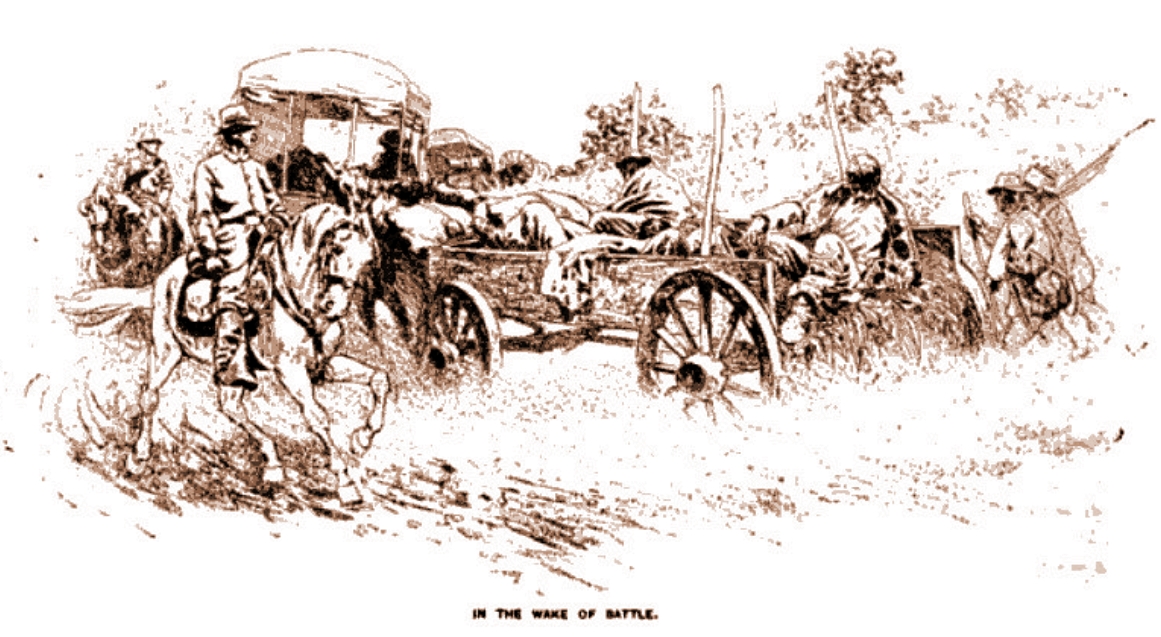
Anna and William “gave up our sweet country home, and from that date were ‘dwellers in tents,’ occupied usually in field hospitals, choosing that work because there was the greatest need, and knowing that while many were willing to work at home, but few could go to the front”.
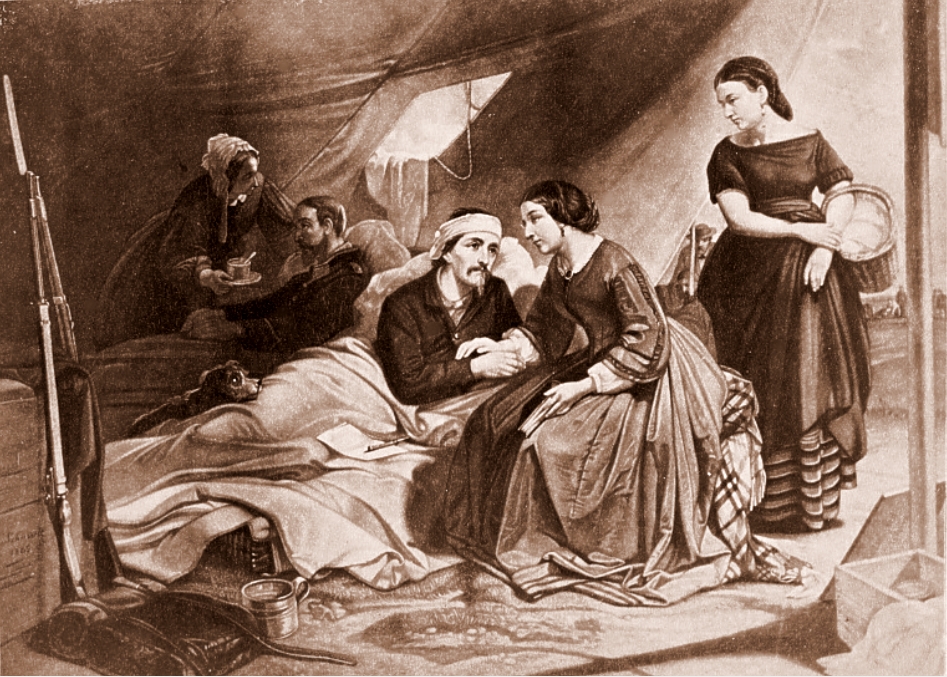
Nurses Tending to the Wounded
They set to work on the overwhelming numbers of wounded and sick, and as Anna recalled:
My imperfect notes of this date are filled with names of terribly wounded men, who are scattered over the entire extent of the field, recalling most vividly scenes that can never be forgotten. Those were fortunate who were in barns, where they were sure of a little hay or straw upon which to rest their shattered limbs, while many of the others lingered a few days, with no bed nor pillow other than a knapsack or piece of clothing. And then the weary marches over, their last fight ended, they closed their eyes, and sank to rest. Upon one end of the piazza, at Locust Spring, lay Lieut. Williams, of Connecticut. For three weeks he lingered in intense suffering, and then passed from earth. That same piazza had been thickly strewn with the dying, and the wounded, ever since the battle. In the house were several officers, all seriously wounded. The barns were crowded with the sufferers; among them Lieut. Maine, of the 8th Connecticut-nursed by his wife, patient and gentle, while life lasted. In one of the tents was a zouave; a shell had torn his chin and fractured the shoulder; both legs broken; the fingers of one hand partly gone, yet he is cheerful, and thinks he got off well. Near him lay a young boy, from Union, Centre County, Penna., wounded in the chest badly, but, as his surgeon said, not fatally. His thoughts, sleeping and waking, were of home. He was constantly repeating, “Oh, take me to my mother.” And when I told him that I would do all I could for him, that I knew many persons in Centre County, he brightened up and quickly said: “Then you will take me to my mother.” Of his wound he never seemed to think, but at each visit we saw that he was fast passing beyond our car; and in a few days, repeating, while life lasted, the same words, he “fell asleep,” and so went to his “long home.” ….
Going into the hospital one evening, I found, lying upon a stretcher near the door, Wm. P. C., of the 12thNew York State Vols.,” the only son of his mother, and she was a widow.” To my question, if I could do anything for him, he replied: “Not now; he was waiting for the surgeon to attend to him ” A few hours later, when taken from the operating table, I found him perfectly calm and quiet; after making him as comfortable as could be done for the night, promised to care for him on the morrow. When I first wrote to his mother, it was only to tell her he was wounded. The following day was a decided change for the worse, and he thought he could not live. Even then, it was not upon his own sufferings and death that his mind dwelt, but upon his absent mother and sisters. He would constantly exclaim, “This will kill my mother; oh, break it gently to her.” After messages to them, would ask that some portion of Scripture be read to him, and the prayers which he named repeated with him. Thus occupied, the hours fled too rapidly, as we felt that each moment was precious to him who was upon the brink of that unknown river, whose crossing must be alone. By his lonely bedside, I wept bitter tears for the home so darkened, the light of a mother’s life departed, and the sorrowing sisters of whom he spake. Conscious almost to the moment of his departure, he calmly and trustfully passed “into the spirit land.”
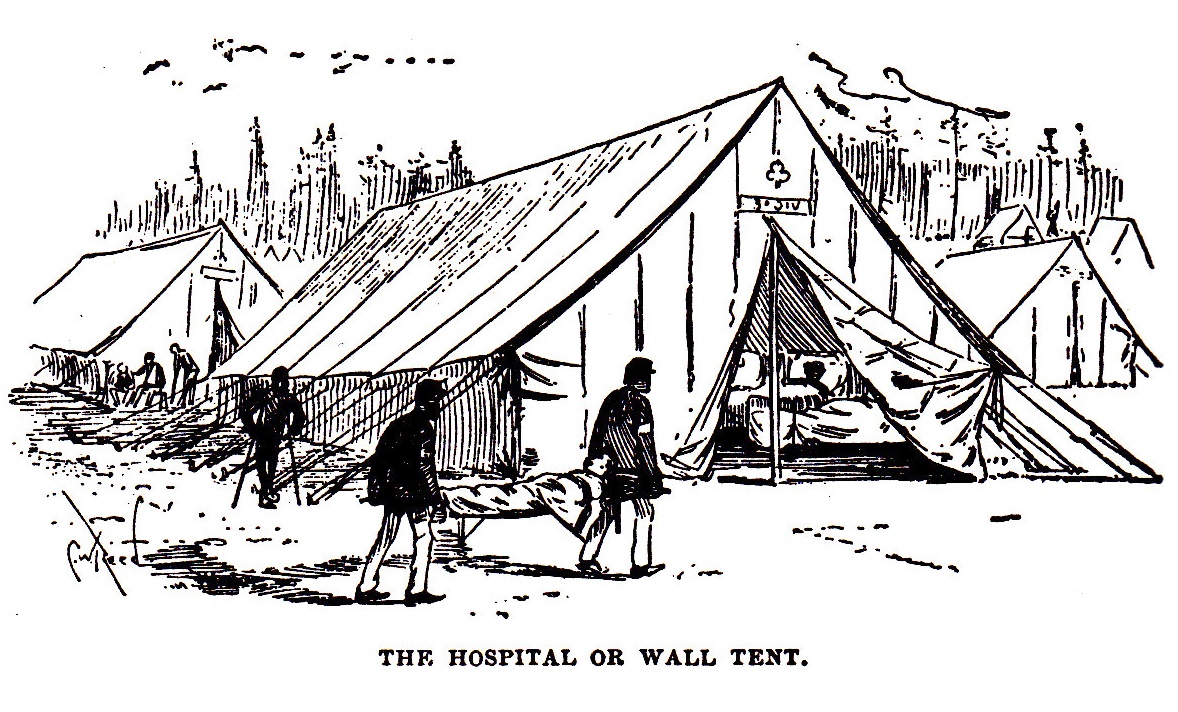
Anna Holstein continued nursing in field hospitals until the end of the war, following the Army of the Potomac in its campaigns, including Fredericksburg, Chancellorsville, Gettysburg, and the Overland Campaign and Siege of Petersburg. Later in the war, she tended to former Prisoners of War, finally wrapping up her duties in July of 1865: “The 1st of July found the hospitals vacated, and a few months later restored to their former uses. The war ended, peace ensured, men mustered out of service, our work completed, there came for the first time in all these long, eventful years, to overtasked mind and wearied body, the perfect rest of home!”
Sources:
Three Years in the Field Hospitals of the Army of the Potomac by Anna Morris Holstein
Women in the Civil War by Mary Elizabeth Massey
Women’s Work in the Civil War: A Record of Heroism, Patriotism and Patience by L.P. Brockett
Amazon affiliate links: We may earn a small commission from purchases made from Amazon.com links at no cost to our visitors. For more info, please read our affiliate disclosure.


