The Engagement Between USCT and Confederate Cavalry at Scottsboro, Alabama, January 8th, 1865
In November, 1864, Lieutenant General John B. Hood was advancing his Army of Tennessee northward from Georgia and Alabama into Tennessee. On the 21st of the month, in conjunction with this movement, Hood ordered Brigadier General Hylan B. Lyon to “proceed with my command across the Tennessee and Cumberland Rivers west of Clarksville, Tenn., to move up the north bank of Cumberland River, capture Clarksville, if practicable, tear up and destroy the railroad and telegraph lines running into Nashville, and to put all the mills in running order throughout that entire section for use of the Government”. Hood wanted this raid in the rear of Major General George Thomas’ Army of the Cumberland in Nashville to force the Union commander to send some of his army after Lyon while Hood attacked Nashville.
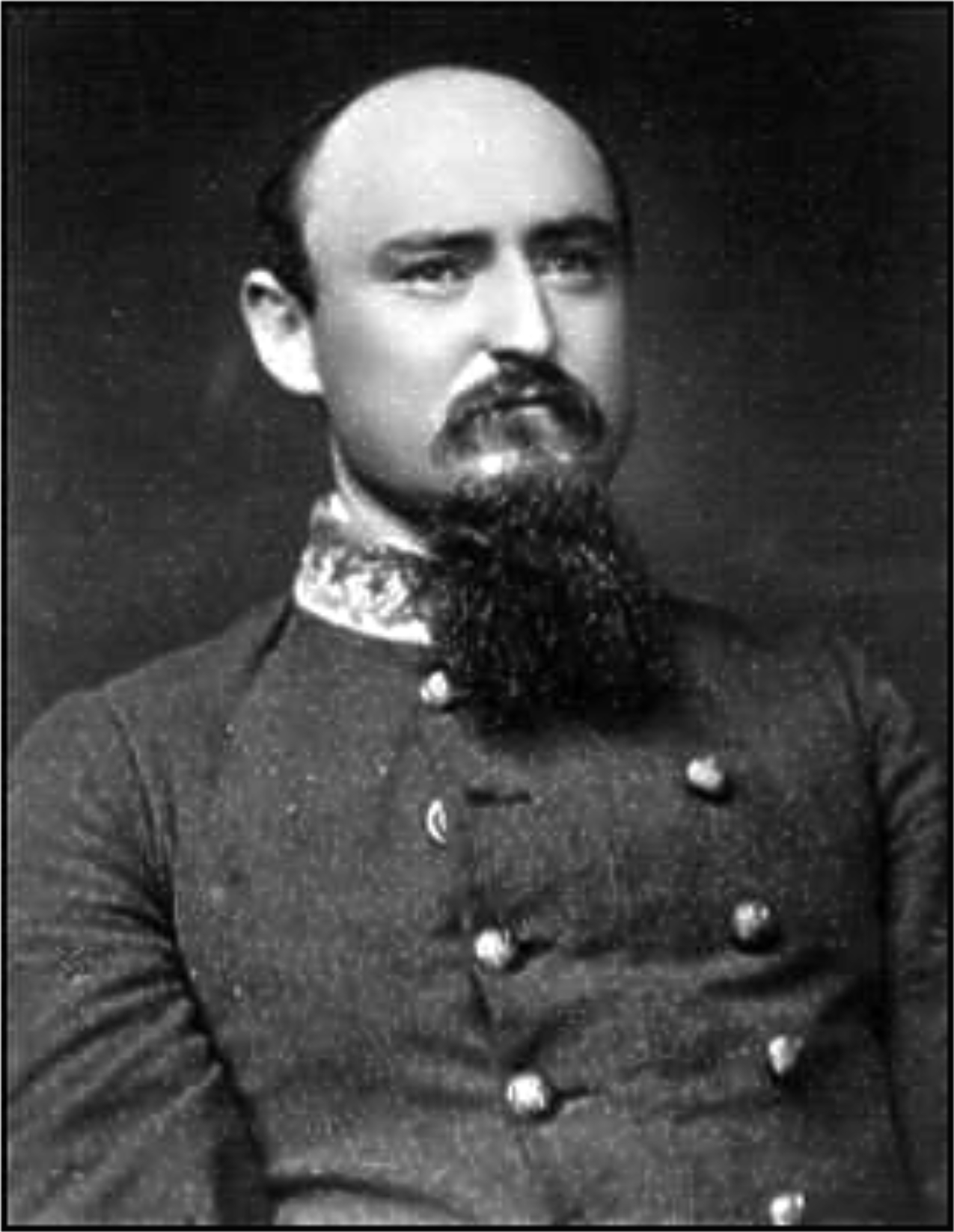
Gen. Hylan B, Lyon CSA
Lyon had 800 men, “undisciplined and but poorly organized, and two pieces of artillery” to carry out his orders, but he left his base in Paris, Tennessee on December 6th, and proceeded into Tennessee and Kentucky, wreaking as much havoc as possible. Lyon also picked up recruits along the way. Thomas was forced to send some of his cavalry after Lyon’s force. Hood’s army was defeated in the Battle of Nashville on December 15th and 16th, but Lyon continued his raid, moving south through Tennessee and finally into Alabama, attacking small union garrisons guarding rail lines and associated infrastructure.
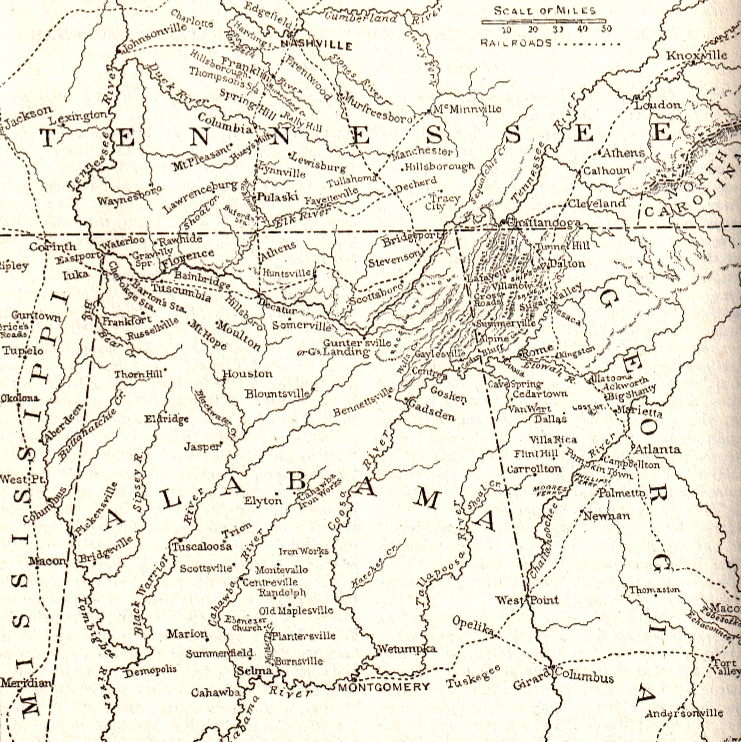
One of these garrisons guarding the rail line at Scottsboro, Alabama consisted of a detachment of 29 men from the 101st United States Colored Troops (USCT) and a detachment of 25 men from the 110th USCT. Their commanding officer was Lieutenant John H. Hull. The 101st USCT had been organized in September 1864, while the 110th was originally organized as the 2nd Alabama Colored Infantry in June 1864 before being redesignated as the 110th UCST. Hull’s command had been ordered to Larkinsville, Alabama, near Scottsboro on January 7th, 1865.
On the afternoon of January 8th, Hull received word that a large enemy force under General Lyon was approaching. The U.S. commander sent a request for reinforcements and deployed his troops with one line outside the railroad depot, and a line inside the building. The men cut holes in the walls of the depot to fire their muskets through. At 5:30, Lyon’s forward element attacked Hull’s pickets; the Federals were able to drive them off, but the Confederate main force attacked at 6:00.
The outside line was compelled by enemy fire to retire to the inside of the depot. There, the fighting was close in with the Rebels grabbing the barrels of the Federals’ muskets to pull them through the holes in the walls. The Confederates made three assaults on the depot, and were driven back each time. After pulling back the third time, the Rebels opened fire on the depot with their artillery.
Hull and his men had agreed they would not surrender, but they also could no longer remain in the depot. They broke out of the depot and headed up some high ground about 450 yards away. They prepared to renew the fighting, but at that point, and just in time, Federal reinforcements arrived by rail ending the fighting.
Lieutenant Hull filed this after action report:
Hdqrs. Company E, 101st Regt., U. S. Colored Infty.,
Scottsborough, Ala,, January 8, 1865.Lieutenant: I have the honor to report that in compliance with orders received, I proceeded to Larkinsviile and reported to Captain Givens, commanding’ post, with fifty-four men, consisting of a detachment of Company E, One hundred and first (twenty-nine men), and Company E, One hundred and tenth, of U. S. Colored Infantry (twenty-five men), commanded by Second Lieut. David Smart. On the evening of the 7th instant I was ordered by Captain Givens to proceed with my command to Scottsborough immediately, to guard water-tanks and Government property. On the 8th instant, at 4 p. m., Colonel Harrison passed through Scottsborough, informing me that the rebel General Lyon was moving on the railroad with a force of from 1,000 to 1,500 men, ordering me to patrol the road for two miles and a half, both east and west, which order I promptly obeyed. At 5 p. m. one of my scouts returned, reporting the enemy advancing in force. I immediately forwarded a request to Colonel Harrison, at Bellefonte Station, for reenforcements, which did not arrive until 10 o’clock, after the fighting was over. At 5:30 o’clock the enemy attacked my pickets, wounding and disabling one of them. After shooting him they stabbed him three times, twice in the neck and once in the back. I immediately sent Lieutenant Smart with a squad, who drove the enemy off, bringing in the wounded man, the enemy taking with them his musket and accouterments.
Scottsborough (or Scottsboro as it’s spelled today) is in northeast Alabama
At 6 o’clock the enemy attacked in force, from all information I could obtain, 1,500 strong, with two 12 pounder howitzers. They massed their force on the north side of the depot, making an assault, which I repulsed after ten minutes almost hand-to-band encounter. Again they assaulted on the south side, coming up and laying hold of the muzzles of my men’s guns, attempting to wrest them through the loopholes of the depot building, in which we were stationed. This assault lasted about fifteen minutes. Again they were repulsed, when all was quiet for about twenty-five minutes, when they made their third and last assault on the south side and west, and which was the most severe and closely contested of all, lasting some thirty minutes before they were driven back. They then fell back beyond the range of my muskets
and opened on me with artillery, compelling me to abandon the depot. I fell back to the mountain, some 450 yards, where I halted my men (the enemy pursuing me about half that distance), intending to renew the fighting; but hearing that there were three sections of cars loaded with our troops lying at the water-tanks one mile and a quarter west of Scottsborough, I marched my command down to them, making my report to the commanding officer, Colonel ______,who ordered me to Larkinsville to report to Brigadier-General Cruft, who ordered me to bring my command up to Larkinsville. On my arrival there I made application to General Cruft for medical aid for my wounded men. He ordered two surgeons from Colonel Salm’s command to attend my wounded men. They came and looked at them, but left without doing anything for them; consequently, my wounded did not get their wounds dressed until the afternoon of the 12th instant.Two Unidentified African American Soldiers, Library of Congress photo
I am under lasting obligations to Colonel Morgan, of the Fourteenth U. S. Colored Infantry, and his surgeon for their attention to my wounded, doing all they could for them, to whom I applied for assistance after I found that General Cruft’s surgeons would do nothing for me.
On my arrival at Larkinsville I reported to you and asked for orders, which were for me to send my wounded men by first train either to Huntsville or Stevenson, as medical aid could not be sent to me but owing to the bridge over Paint Rock being out of repair I did not have an opportunity until the morning of the 12th instant. l take pleasure in saying that I find my men, though but little accustomed to the use of the musket, and not yet mustered into service, to be cool and determined and willing to obey my order; and at no time did I lose confidence in their willingness to fight to the last, though surrounded by a much larger force and aided by artillery.
For Lieutenant Smart, commanding detachment of One hundred and tenth U. S. Colored Infantry, I must say that he was all that could be expected, cheering the men on and inspiring them with the belief that all would be well and we were strong enough to drive them off.
My loss was six wounded: Sergt. Amos Bird, left leg; Sergeant Annis, left leg shot off; Corporal Lacy, slightly; Privates Robert Williams, in leg, Jones slight; private from Lieutenant Smart’s company, whose leg was shot off. We inflicted a loss on the enemy of 1 colonel and 17 men [killed] and 40 wounded.
I am, very respectfully, your obedient servant,
JOHN H. HULL,
First Lieutenant, Commanding Company.Lieut. W. M. Scott,
Acting Assistant Adjutant- General.
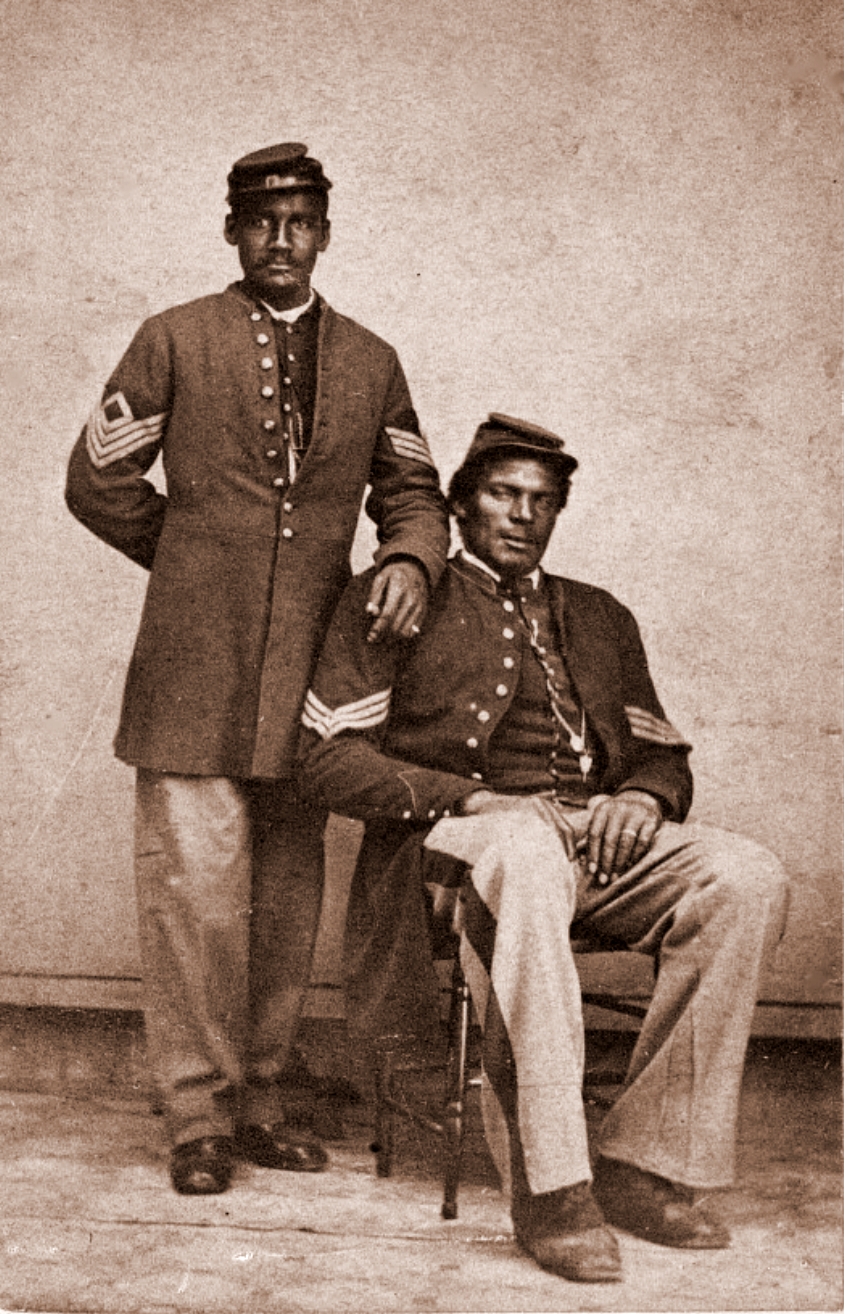
The wounds of one of the men whose leg was shot off proved mortal. It’s unknown if he could have been saved had the two surgeons obeyed General Cruft’s orders and provided medical aid immediately.
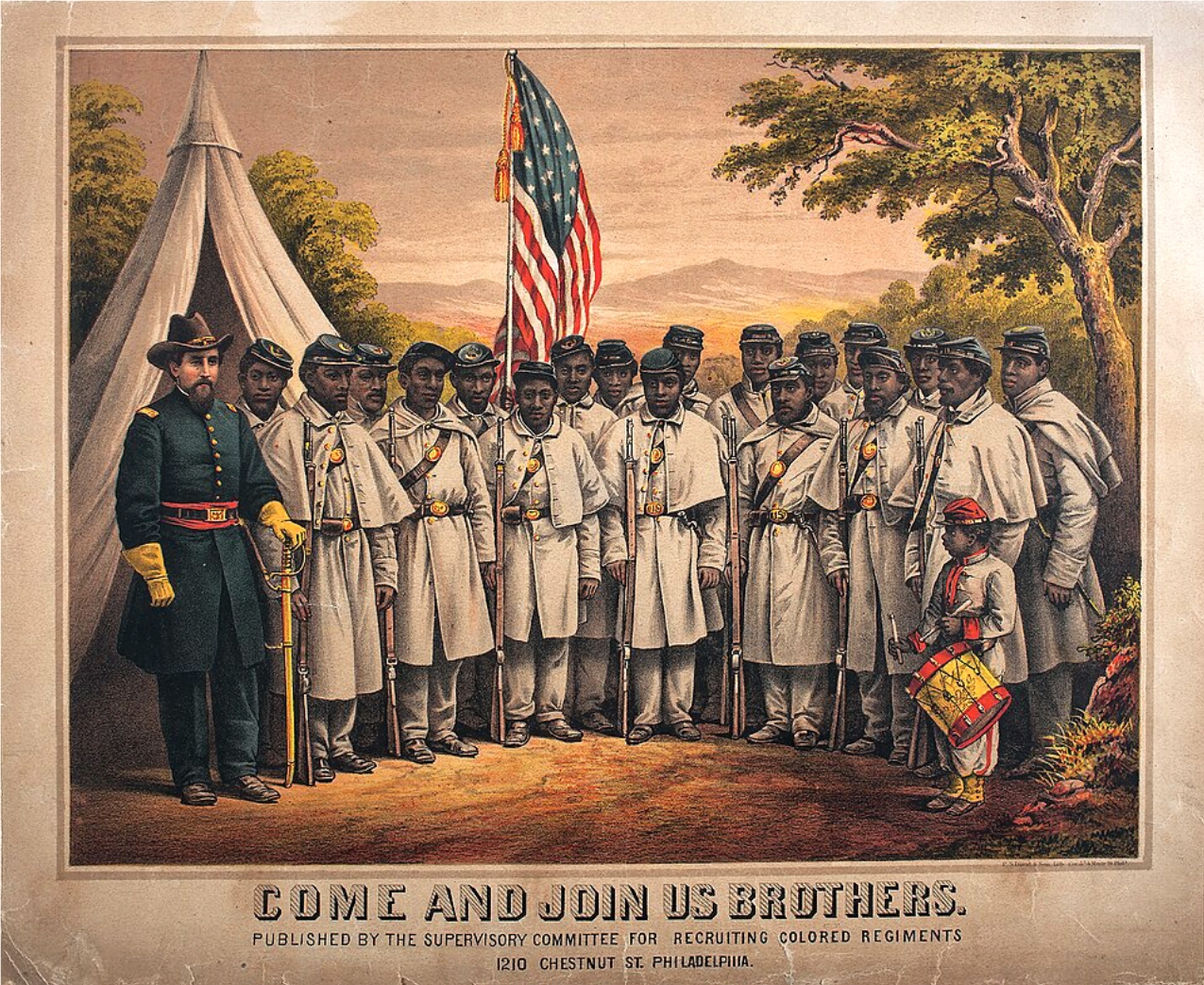
Recruiting Poster for USCT
Brigadier General Thomas J. Wood, commanding the Union 4th Corps, also wrote a report to the Department of the Cumberland headquarters praising the action of Hull’s troops. This was unusual as they weren’t under his command, but had been part of Wood’s mission to stop Lyon’s raid.
Headquarters Fourth Army Corps,
Huntsville, Ala,, January 13, 1865,Brig. Gen. W. D. Whipple,
Asst, Adjt. Gen, and Chief of Staff Dept of the CumberlandGeneral: Though the troops whose gallant conduct I desire to commend to the notice of the commanding general do not belong to my command, yet as he had charged me
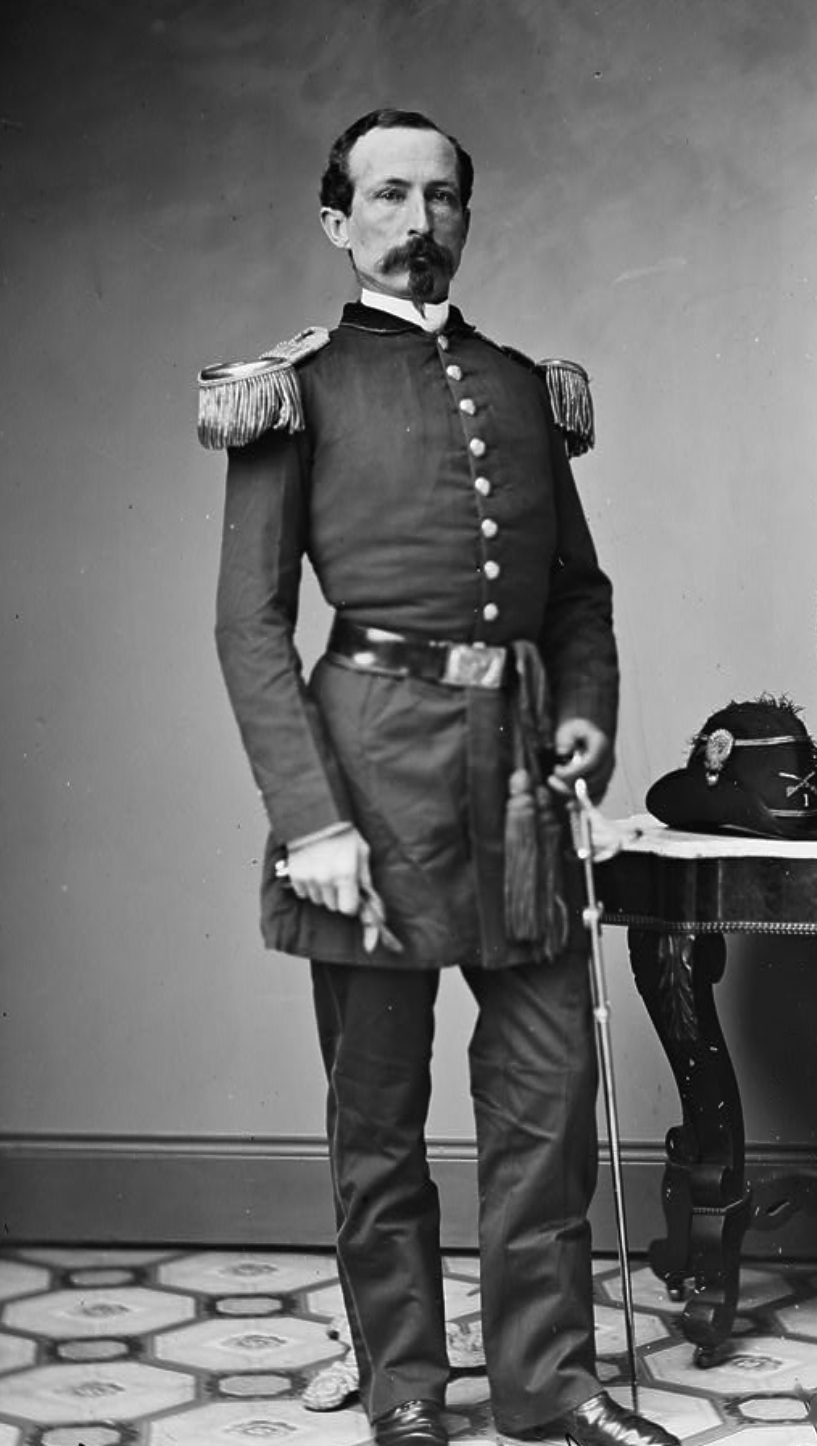
General Thomas J. Wood
with the duty of trying to destroy the force of the rebel General Lyon, and as the gallantry was displayed in the operations against the rebel chieftain, I deem it my duty, as it certainly is my pleasure, to make a special report of the obstinate defense made by First Lieut. John H. Hull, One hundred and first U. S. Colored Troops, and the small detachment under his command. Lieutenant Hull, with a detachment of fifty-four colored recruits, was ordered on the 7th instant to Scottsborough, on Memphis and Charleston Railroad, to guard the water-tanks and depot. During the afternoon of the 8th Lieutenant Hull found the enemy advancing on him in heavy force. Retiring to the depot, which he had loop-holed for defense, he awaited the attack. The enemy made a vigorous assault on the north side of the depot, which was repulsed. Changing his point of attack, he assaulted the south side of the depot, only to be repulsed. Finally he attacked the west end and north side of the building, to be again more seriously repulsed than in either of the previous assaults. Lieutenant Hull reports that the enemy came up in the assaults so near that he seized the muzzles of the muskets and attempted to wrest them through the loopholes. After the third repulse the enemy retired out of musket range and opened on the depot with his artillery, two 12-pounder howitzers. This made the building untenable, when Lieutenant Hull evacuated it and led his brave little band up the side of the mountain, a distance of about 450 yards, intending there to renew the light, but the enemy scarcely attempted to follow. After reaching the mountain Lieutenant Hull learned that a train with re-enforcements had reached one of the water-tanks, about a mile and a quarter distant. He at once concentrated his command to it, and was not followed by the enemy, who, on the contrary, retreated toward the Tennessee River. Lieutenant Hull estimates the enemy’s force at 1,200, and reports having inflicted on him a loss of Colonel Oneal and 17 men killed and 45 wounded. The casualties of the gallant garrison were 2 men wounded. I think such a resolute defense against such overwhelming odds merits commendation in orders, not only as an act of justice to the brave men who made it, but as an example to other railroad guards of what may be accomplished by a determined resistance. I am informed that the recruits under Lieutenant Hull’s command had not been mustered into the service. Justice to these brave men requires that it should be done without delay.
I am, general, very respectfully, your obedient servant,
TH. J. WOOD,
Brigadier-General of Volunteers Commanding.
General Wood reported fewer casualties in Hull’s command than the Lieutenant had reported. The 4th Corps commander was very impressed with the effort put forth by men who had not yet been officially mustered into service.
Sources:
A Compendium of the War of the Rebellion by Frederick Dyer
The Confederacy’s Last Hurrah: Spring Hill, Franklin, and Nashville by Wiley Sword
Like Men of War: Black Troops in the Civil War, 1862-1865. Second Edition By Noah Andre Trudeau
Official Records of the Union and Confederate Armies in the War of the Rebellion, Series I, Volume 45, Part 1.
Amazon affiliate links: We may earn a small commission from purchases made from Amazon.com links at no cost to our visitors. For more info, please read our affiliate disclosure.


