The 104th Ohio Infantry at the Battles of Franklin and Nashville Tennessee
In November 1864, the 104th Ohio Infantry was serving in the 1st Brigade of the 3rd Division of the Union 23rd Corps, in Major General John M. Schofield’s Army of the Ohio. The 1st Brigade commander, Brigadier General James A. Reilly, was a former colonel of the 104th Ohio. Reilly also had been assigned temporary command of the 3rd Division. Late in the month, Lieutenant General John Bell Hood marched his Army of Tennessee north from Florence, Alabama, in an attempt to drive Union forces out of Tennessee. Schofield marched his army north towards Nashville, where Major General George Thomas and his Army of the Cumberland defended that city.
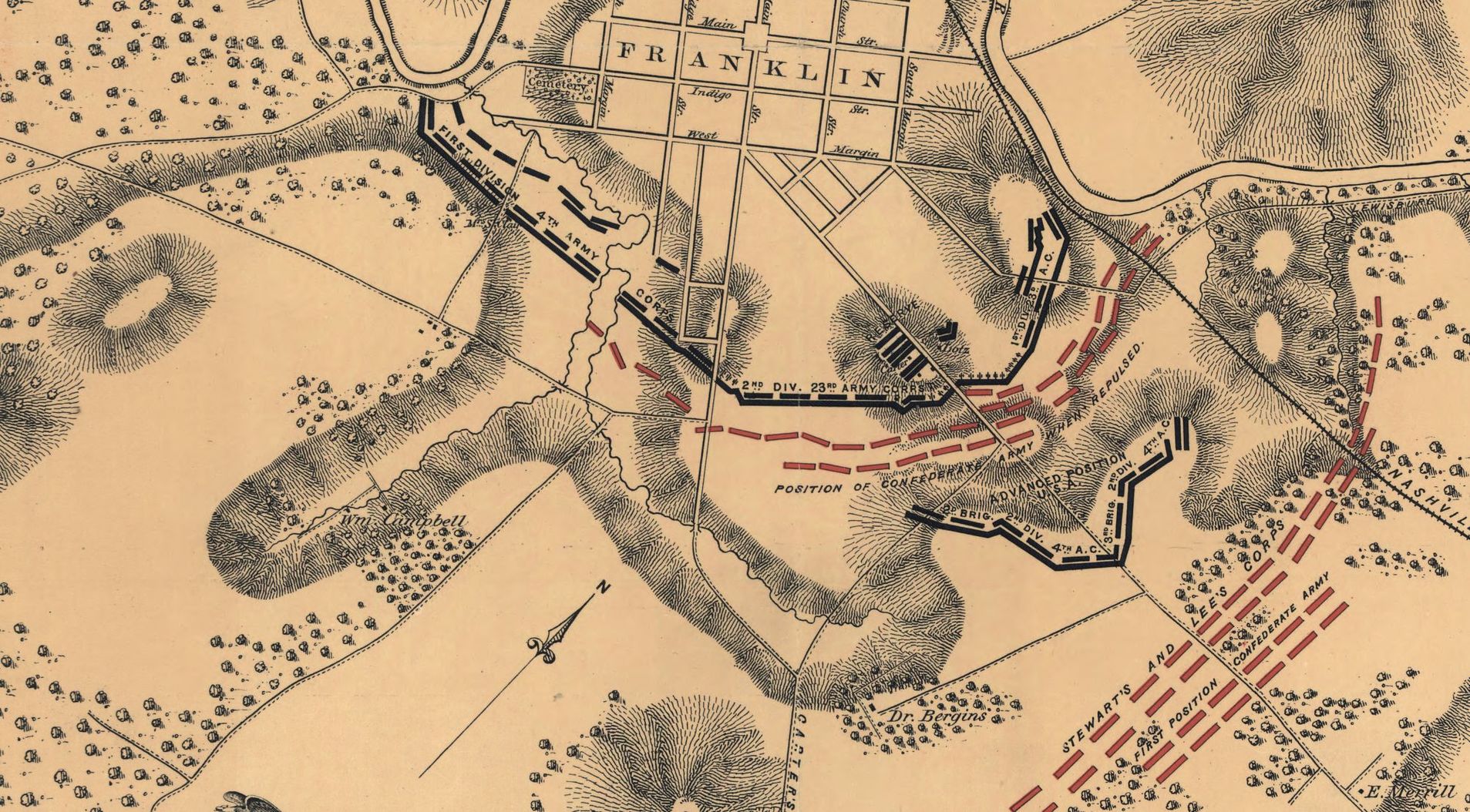
The Army of the Ohio was nearly trapped at Spring Hill, Tennessee, on November 29th, but managed to escape and set up a defense at the town of Franklin, south of Nashville on November 30th. The 3rd Division was on the Union left flank, and was positioned from the Columbia Pike east to the Harpeth River. The 1st Brigade were on the division’s right, near the Columbia Pike and a cotton gin. I previously posted on Reilly’s 1st Brigade at the Battle of Franklin. This brigade consisted of the 12th and 16th Kentucky, 100th, 104th, and 175th Ohio, and 8th Tennessee (Union) infantry regiments. Here is a more detailed look at the action at the regimental level of the 104th Ohio at the Battle of Franklin on November 30th, and also at the Battle of Nashville on December 15th and 16th.
The 104th Ohio was deployed in front of the cotton gin in the 1st Brigade’s line, and proceeded to build defensive works. “We took all the rails we could find and with them built a low post and rail fence, outside of which we threw up an embankment deep and strong enough to protect us from the rebel shot and shell, with salient angles for cross firing and embrasures for the artillery” the unit’s regimental historian wrote.
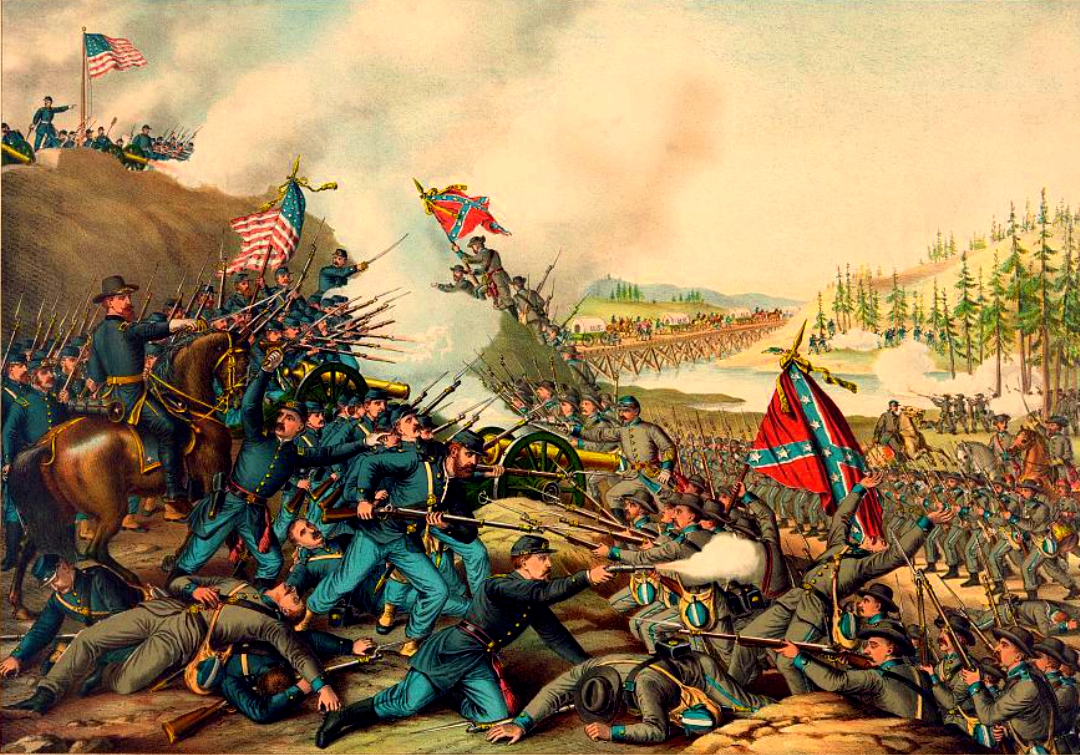
Battle of Franklin by Kurz & Allison
It wasn’t long before part of the Union 4th Corps was seen approaching the line, being pursued by Confederates of Major General Patrick Cleburne’s Division. Colonel Oscar W. Sterl, commanding the 104th Ohio, described the intense fighting that followed in his after action report:
Hdqrs, 104th Regiment Ohio Volunteer Infantry,
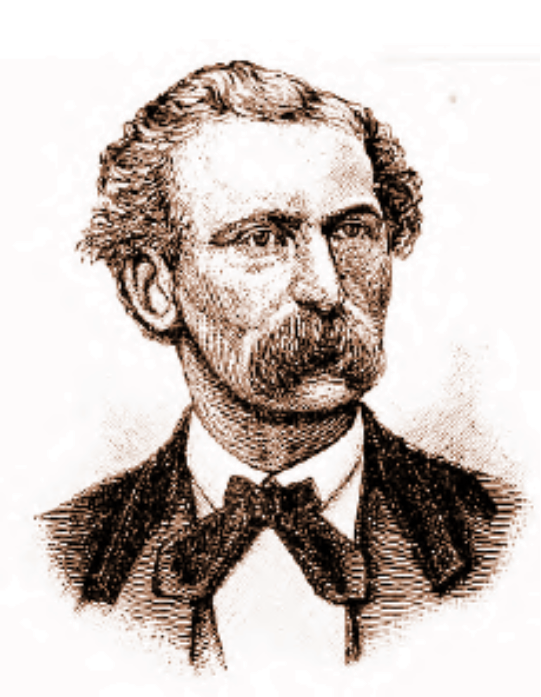
Nashville, Tenn., December 6, 1864.Sir: In obedience to your command, I have the honor to transmit a report of the part taken by the One hundred and fourth Regiment Ohio Volunteer Infantry in the battle at Franklin, Tenn.
Col. Oscar Sterl 104th Ohio
The regiment (in connection with the brigade) reached Franklin, Tenn., from Columbia, about 5 o’clock on the morning of the 30th ultimo, and bivouacked in line until about 8 a. m., when the brigade went into position in two lines, on the right of the division—the One hundredth and One hundred and fourth Ohio formed the first line, the One hundredth on the right, its right resting on the Columbia pike, and the One hundred and fourth joining it on the left. The regiment immediately erected in its front a good breast-work, most of the companies putting head-logs upon their works. These were scarcely completed until the rebels advanced in two lines against the Second Brigade of the division, on our left. A curve in the works of the left wing of the regiment enabled the left companies to enfilade the lines of the rebels as they advanced, and the three left companies tired several rounds, doing good execution, when the rebel lines fell back in disorder and confusion. Immediately afterward a brigade of the Fourth Corps, which had been posted on a ridge about 500 yards in front of our works, began falling back, first in good line and order, and afterward in great haste and confusion, when it became apparent that the real charge was being directed against that part of the line occupied by this regiment, the One hundredth Ohio, and the brigade of the Second Division on the right of the pike. As the line of the Fourth Corps fell back from the ridge it was followed at a distance of not over 100 paces by the first line of the rebel infantry, which gained rapidly upon it, so that the men of the Fourth Corps had scarcely crossed our works until the ditches in front were filled with rebels, scrambling to get over the works, and in some instances, upon the right of the regiment and in front of the One hundredth Ohio, many of the rebels passed over the works in company with the rear of the Fourth Corps men. The confusion and hurry of the crossing of this advance line, their officers crying to them, to “get to the rear and reform,” came near throwing our line in confusion, and the three right companies borne back by them, and in doubt as to the commands, fell back a few paces, but in almost a moment afterward rushed back, with fixed bayonets, and regained their works. The Sixteenth and Twelfth Kentucky rushed from the second line simultaneously with them and joined them and the One hundredth Ohio, on the first line, from which (having overcome all the rebels who had crossed the works) they kept up a constant and destructive stream of fire, cutting down by hundreds the rebels who had accumulated and massed in the ditches and immediately in front. The other seven companies to the left, so soon as the Fourth Corps men had crossed, began to pour forth such a severe fire that though the rebels in greater number than their line had gained the ditches, were unable to attempt getting over the works, but were cut to pieces by the destructive fire of the men. The rebels in this charge were seen in three lines at least, but if in more, the smoke of the firing prevented us from seeing their approach. So soon as it became apparent that this charge was repulsed, the firing was stilled, and those of the rebels in the ditches who were not killed or wounded were ordered to ground arms and surrender, when about 300 climbed over the works and were sent to the rear. Then almost immediately a second charge of the rebels followed, equaled only in fierce determination and bravery by that of the first charge; this was again met by a fire equally as true in aim and destruction us before, resulting in the complete repulse of the enemy, when about 200 more prisoners were taken in over the works. By the time the second charge was repulsed night had come, and, though firing was afterward directed at our line from the front, and replied to by our men, yet no subsequent charge was successful in reaching near to our works. The regiment remained in the works until after 11 p. m., when, with their command, retired across the Harpeth River, and took up the line of march toward Nashville.
Map of the Battle of Franklin
Eleven rebel battle-flags were taken in front of our lines (two by Color-Corp. Newton H. Hall, Company I, who shot their bearers, and crossed over and captured them during the heaviest of the firing); 9 of them were turned over to brigade headquarters; the others are reported as having been sent to friends at home by mail before it was known by the captors that they should be turned over, or orders received requiring it. The slaughter of the rebels was very great, the ditches were filled with them, and the ground for many rods in front was literally covered with their dead and wounded.
The officers and men all did nobly, and when the battle was ended and the rolls called scarcely any were missing.
Our casualties in this engagement were: Killed, 1 commissioned officer, 16 enlisted men: wounded, 2 commissioned officers, 32 enlisted men; missing, 6 enlisted men; total, 3 commissioned officers and 54 enlisted men.
I am, sir, very respectfully,
O. W. STERL,
Colonel 104th Ohio Volunteer Infantry.Actg. Asst. Adjt. Gen., 1st Brig, 3d Div., 23d A. C.
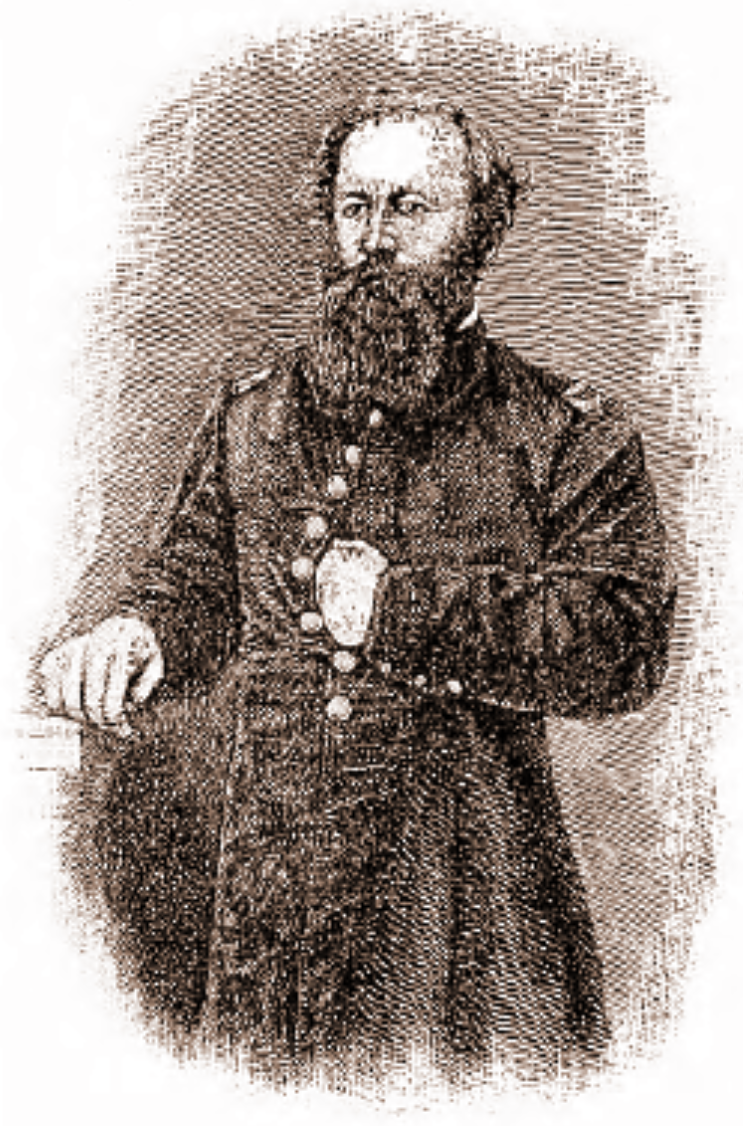
Lt. William F. Kemble 104th Ohio
The officer in the 104th who killed at the Battle of Franklin was 1st Lieutenant William F. Kemble of Company C. The regimental historian noted that Kemble was “conspicuous for his bravery, throwing axes, hatchets and anything that came to hand into the seething mass of rebels in front, till a rebel bullet laid him cold in death”. One other officer, Captain David D. Bard, who was in command of the regiment’s skirmish line, was mortally wounded and captured. He died four days after the battle.
The Army of the Ohio slipped away under cover of darkness and reached the Federal lines at Nashville on December 1st. Hood’s army was right behind and began
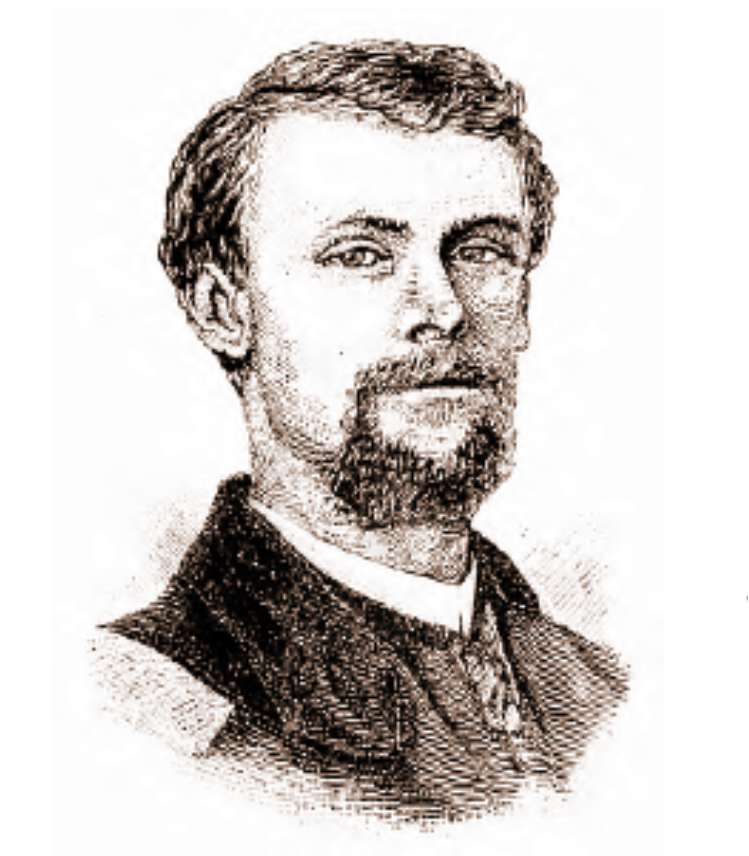
Capt. David D. Bard 104th Ohio
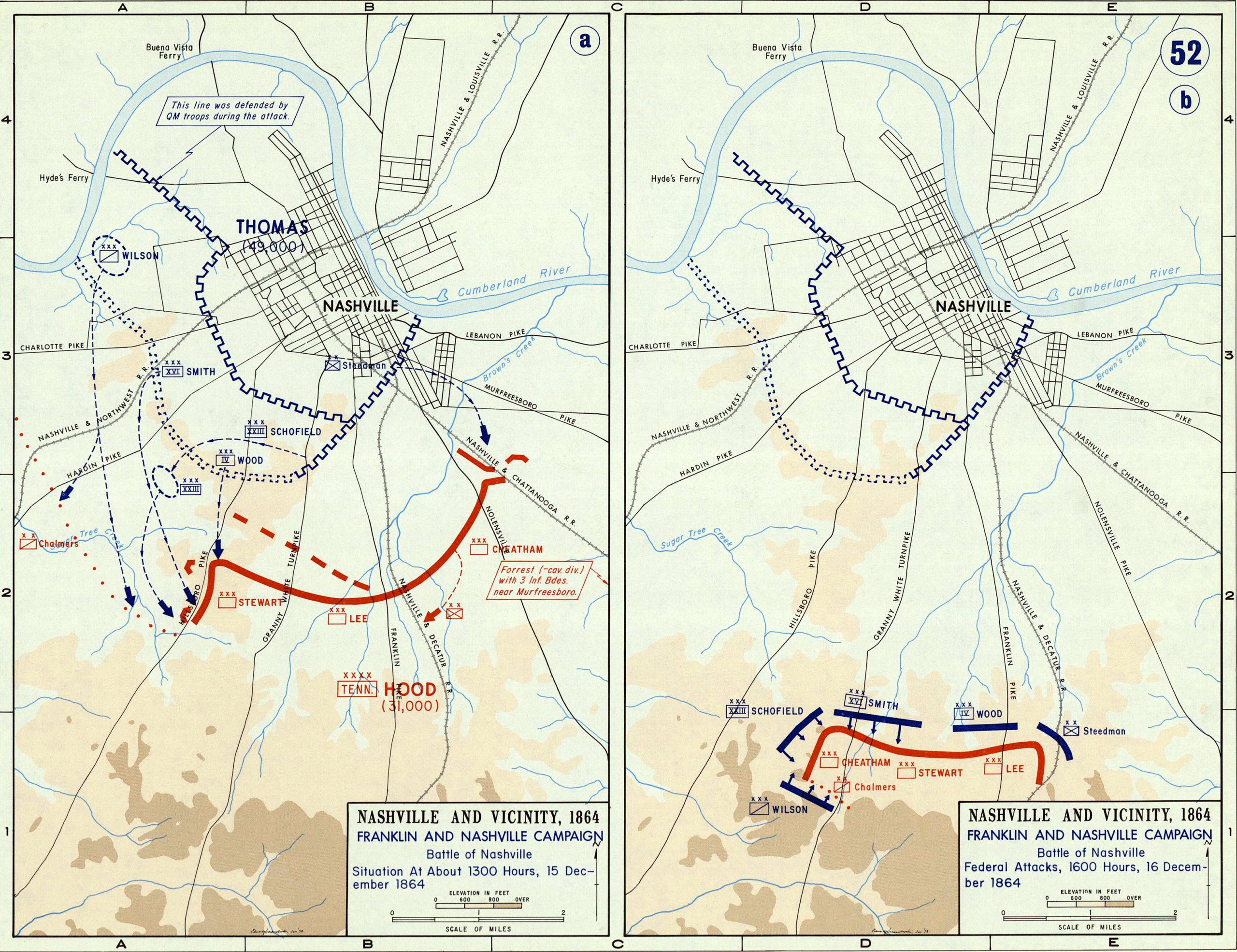
arriving the next day. Rather than attack, Hood decided to entrench and set up defensive positions and wait for Thomas to attack him. The Union commander prepared methodically to attack, but between his preparations and an ice storm, the Federal attack did not occur until December 15th. The Battle of Nashville was fought on the 15th and 16th, before Hood’s Army was finally forced to retreat, ending the Confederate invasion of Tennessee. The 104th Ohio was on the far right of the Union lines and saw action, but was not as heavily engaged at Nashville as it was at Franklin.
Colonel Steel’s report on the 104th Ohio at Nashville:
Headquarters 104th Ohio Volunteer Infantry
Near Spring Hill, Tenn., December 22, 1864.Captain: In accordance with instructions, I would respectfully submit the following report of the part taken by the One hundred and fourth Ohio Infantry Volunteers in the operations of the 15th and 16thof December, in front of Nashville, Tenn.:
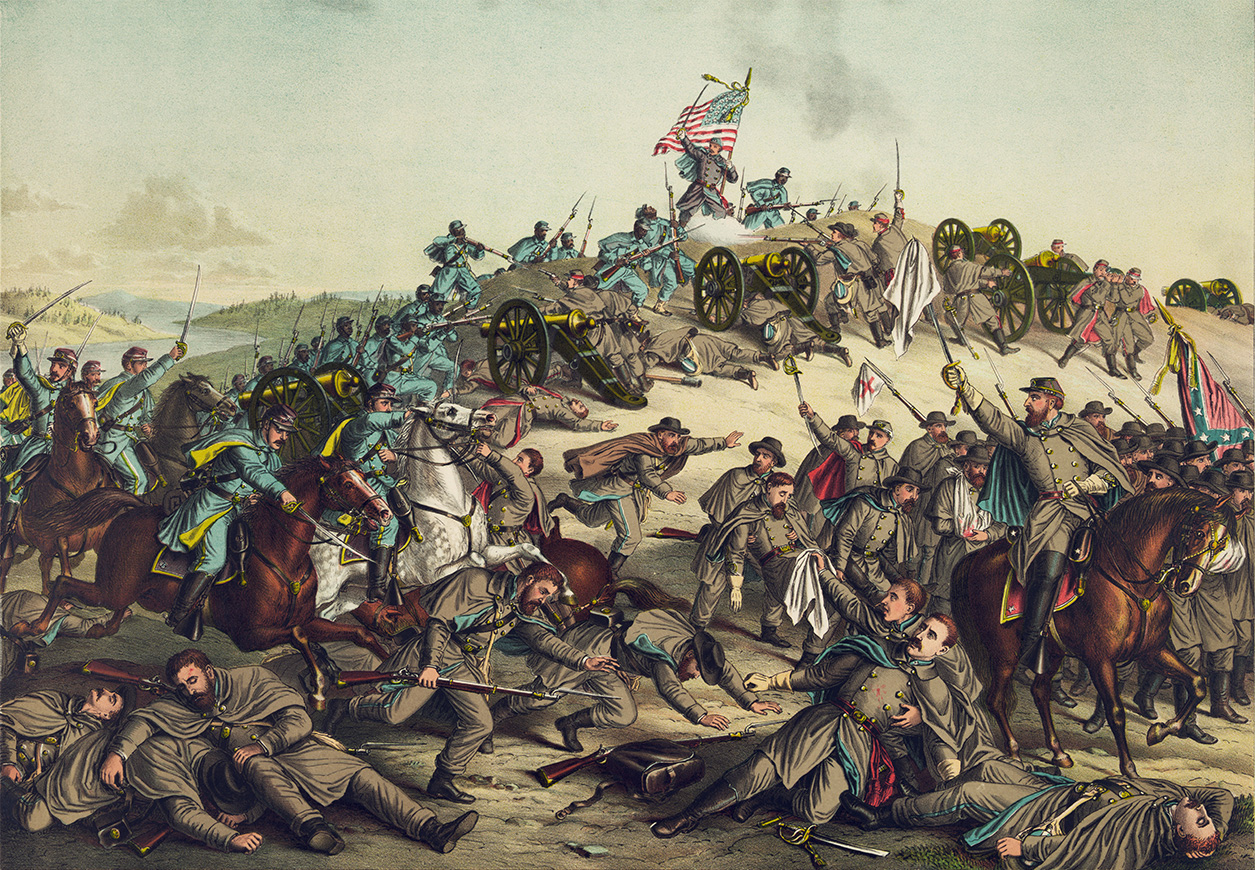
Battle of Nashville by Kurz & Allison
Having been relieved from our position in the works to the right of the Franklin pike, in connection with the rest of the brigade, the One hundred and fourth moved to the right of the Granny White pike, in rear of the Fourth Corps; remained there until 1 p. m., when this regiment in connection with the rest of the brigade, was moved off to the right’ through the works, marching in the rear and parallel to the Fourth Corps and Smith’s corps until we had gained the extreme right, when, changing direction, we were moved to the front, crossing the Hillsborough pike over the ridge on which the Fifteenth Indiana Battery was in position and into a corn-field, where the brigade was halted in column of regiments, the One hundred and fourth in front. Here we lost three men wounded from gunshots from the enemy posted on the ridge in front of us. The troops in our immediate front being at this time pressed very hard by the enemy, the First Brigade was ordered up for support, the One hundred and fourth taking the advance. Moving up under protection of the ridge we obtained position without loss. Maintaining quiet until after dark, the brigade was placed in position in line of battle, the One hundred and fourth on the right and flank. The night was passed in throwing up works. December I6, remained in position in our works until between 3 and 4 p. m., when the order came for the First Brigade to charge the works in front of us. The One hundred and fourth having been placed on the flank in the works at an angle with our main line we were detained some little time in changing front. On reaching their works the enemy were found flying in confusion, having abandoned them without much resistance. The brigade again going into position in line of battle, the One hundred and fourth on the left, temporary works were thrown up during the night.
Very respectfully,
O. W. STERL,
Colonel 104th Ohio Volunteer Infantry.[Capt. J. H. Brown, Acting Assistant Adjutant-General]
Map of the Battle of Nashville
In 1865, the 104th Ohio would fight in North Carolina at Fort Fisher and Wilmington, and would join in General William T. Sherman’s Campaign of the Carolinas in March. The regiment was mustered out in June of 1865.
Sources:
The Confederacy’s Last Hurrah: Spring Hill, Franklin, and Nashville by Wiley Sword
History of the 104th Regiment Ohio Volunteer Infantry 1862 to 1865 by N. A. Pinney
Let Us Die Like Men: The Battle of Franklin, November 30, 1864 by William Lee White
Official Records of the Union and Confederate Armies in the War of the Rebellion, Series I, Volume 45, Part 1
Repelling Hood’s Invasion of Tennessee. In Battles and Leaders of the Civil War, Volume 4. Edited by Robert U. Johnson and Clarence C. Buel
Amazon affiliate links: We may earn a small commission from purchases made from Amazon.com links at no cost to our visitors. For more info, please read our affiliate disclosure.


