Rodman Smoothbore Cannons Served in Coastal Defense and Other Fixed Fortifications
A variety of large caliber cannon were used in the Civil War, most notably in places like the masonry forts on the coasts and in siege operations. These were too big and heavy to be moved with campaigning armies on the march, but were ideal for defending ports against enemy attack or for lobbing shells into cities. Most of these big guns were manufactured in the north and used by the U.S. Army. The Confederates produced some of their own, but made extensive use of captured Federal cannon.

15 Inch Rodman Gun at Battery Rodgers, Alexandria VA
Rodman guns were an improved version of Columbiad guns, another type of heavy artillery developed in the early 19th century and used in the Civil War. Both were cast iron, large caliber muzzleloading smoothbore guns, and while there were some differences in appearance, the biggest difference between Rodmans and other Columbiads was the casting process for each type of gun.
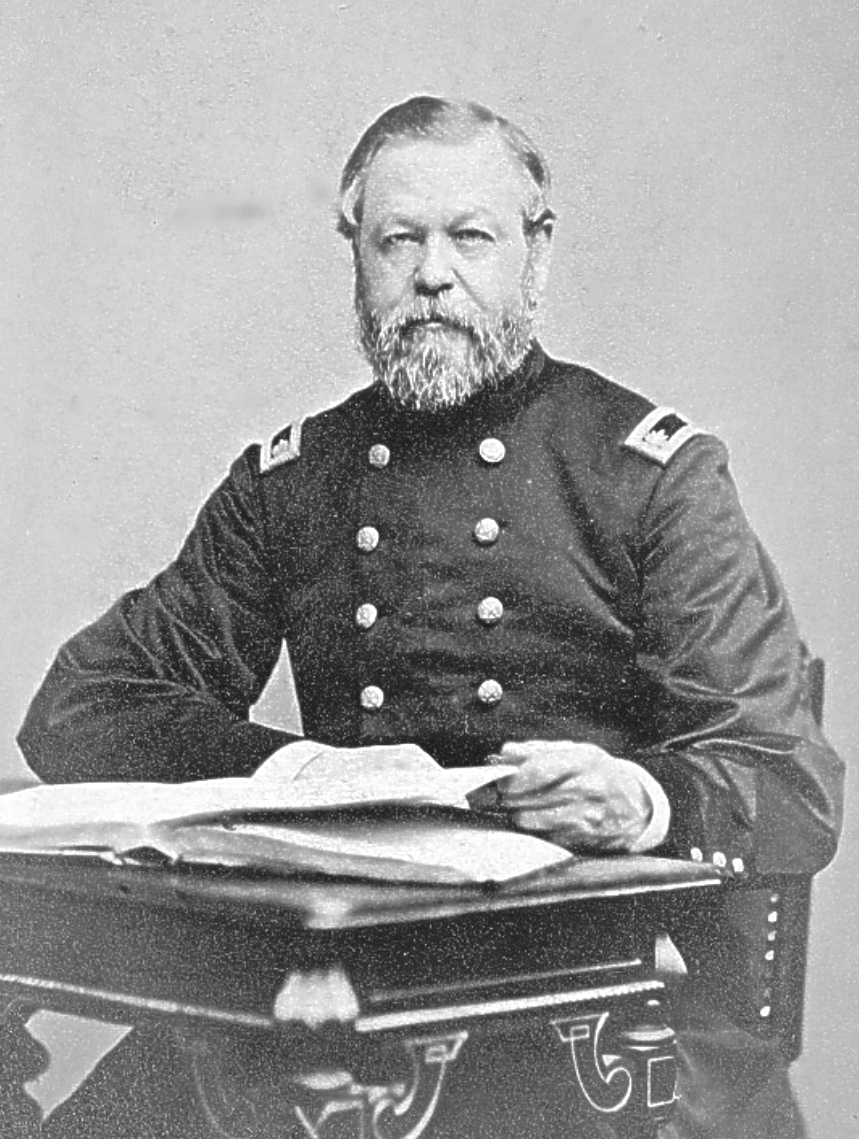
Lt. Col. Thomas Jackson Rodman
At the time, the usual way to cast a cannon was to cast a solid block of metal and then drill out the bore. U.S. Army officer and West Point graduate Thomas Jackson Rodman developed a process where watertight metal tubes were placed in the casting mold where the bore of the gun would be. While the cast iron was poured in the mold, cooling water was circulated through the bore tube and the casting cooled from the inside out. This resulted in much stronger cast iron cannon that could withstand higher internal pressures and was more resistant to cracking or bursting when fired. Cannons made using this process were named after Rodman.
Rodman guns were cast in five bore sizes–8, 10, 13, 15, and 20 inches, with 15 being the most common. They could fire both solid shot and exploding shells. The cannons themselves were slightly bottle shaped, and had a unique rear knob (or cascabel) that was flat and nearly as wide as the back of the cannon. Ropes or other lifting apparatus were attached to the cascabel to help lift the gun, and the small knobs found on other large muzzleloading cannon broke off easily.

8 Inch Rodman Gun at Fort Darling, Drewry’s Bluff, RIchmond National Battlefield Park
Most of the Rodmans assigned to coastal forts never fired on the enemy. Their presence was enough to discourage direct attacks, and they continued to be part of the forts arsenals until around the turn of the 20th century. The Rodmans used in siege operations or other fixed fortifications did see some limited action. Today, many of these guns are on display at military related national and state park sites.

10 Inch Rodman Gun, Fort Taylor, Key West FL
Sources:
Arms and Equipment of the Civil War by Jack Coggins
Mammoth Guns: Rodman’s Smoothbore Cannons
RIA Self Guided Tour: The Rodman Gun
Amazon affiliate links: We may earn a small commission from purchases made from Amazon.com links at no cost to our visitors. For more info, please read our affiliate disclosure.


