Colonel Gouverneur K. Warren’s Brigade at the 2nd Battle of Bull Run or Second Manassas
In August 1862, Major General John Pope was in command of the newly formed Union Army of Virginia, located in the northern part of that state near Washington DC. The Army of the Potomac, under Major General George McClellan, was encamped at Harrison’s Landing on the James River following its defeat in the Peninsula Campaign in McClellan’s failed attempt to capture Richmond. The Lincoln Administration decided to move the Army of the Potomac back to the northern part of Virginia and unite it with the Army of Virginia. Confederate General Robert E. Lee decided to attack the Army of Virginia before McClellan’s army could reinforce it. The two sides would fight a major battle over three days covering much of the same ground as the Battle of Bull Run 13 months earlier.
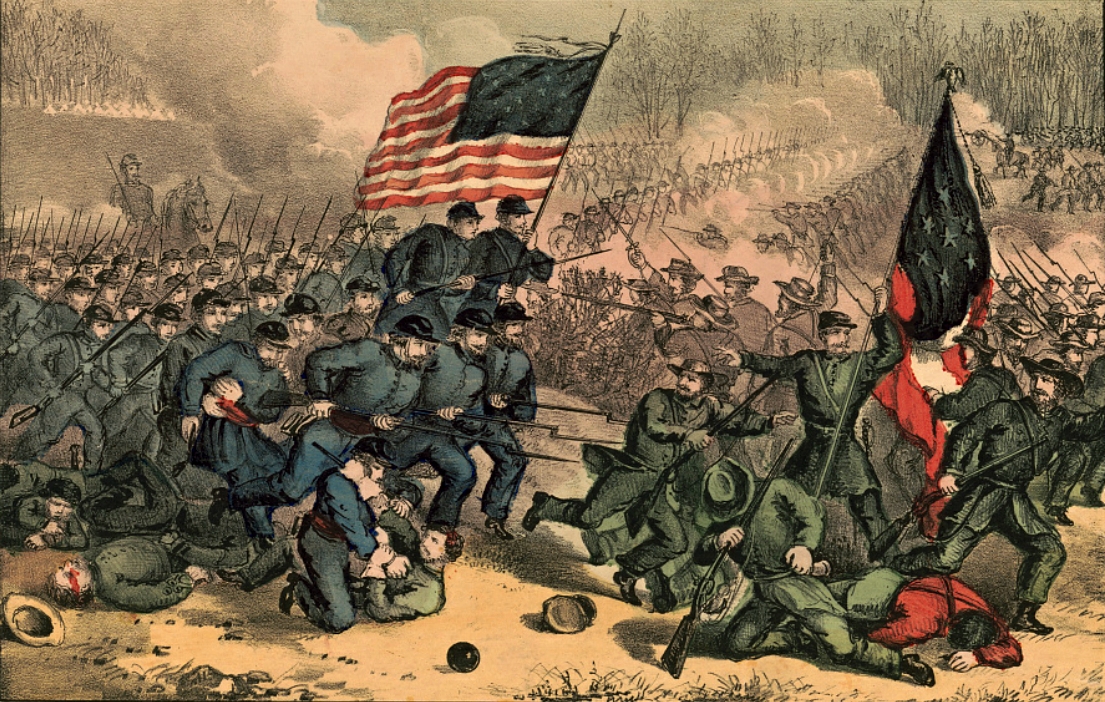
Second Battle of Bull Run by Currier & Ives
The first large action of the 2nd Battle of Bull Run, or 2nd Manassas, occurred on August 28th in the Battle Brawner’s Farm. General Thomas “Stonewall” Jackson attacked a Union column of troops from Brigadier General Rufus King’s division from the Army of Virginia. Fighting continued on August 29th and 30th, as more troops from both sides arrived on the battlefield. The Confederates fought mostly on the defensive on the 29th, repelling Union attacks. Believing that the Confederates were preparing to withdraw, Pope renewed his attack on the 30th against Jackson’s line. But the Rebels were not withdrawing, and after repulsing the Federals, Confederates under General James Longstreet launched a counterattack on the Union left.
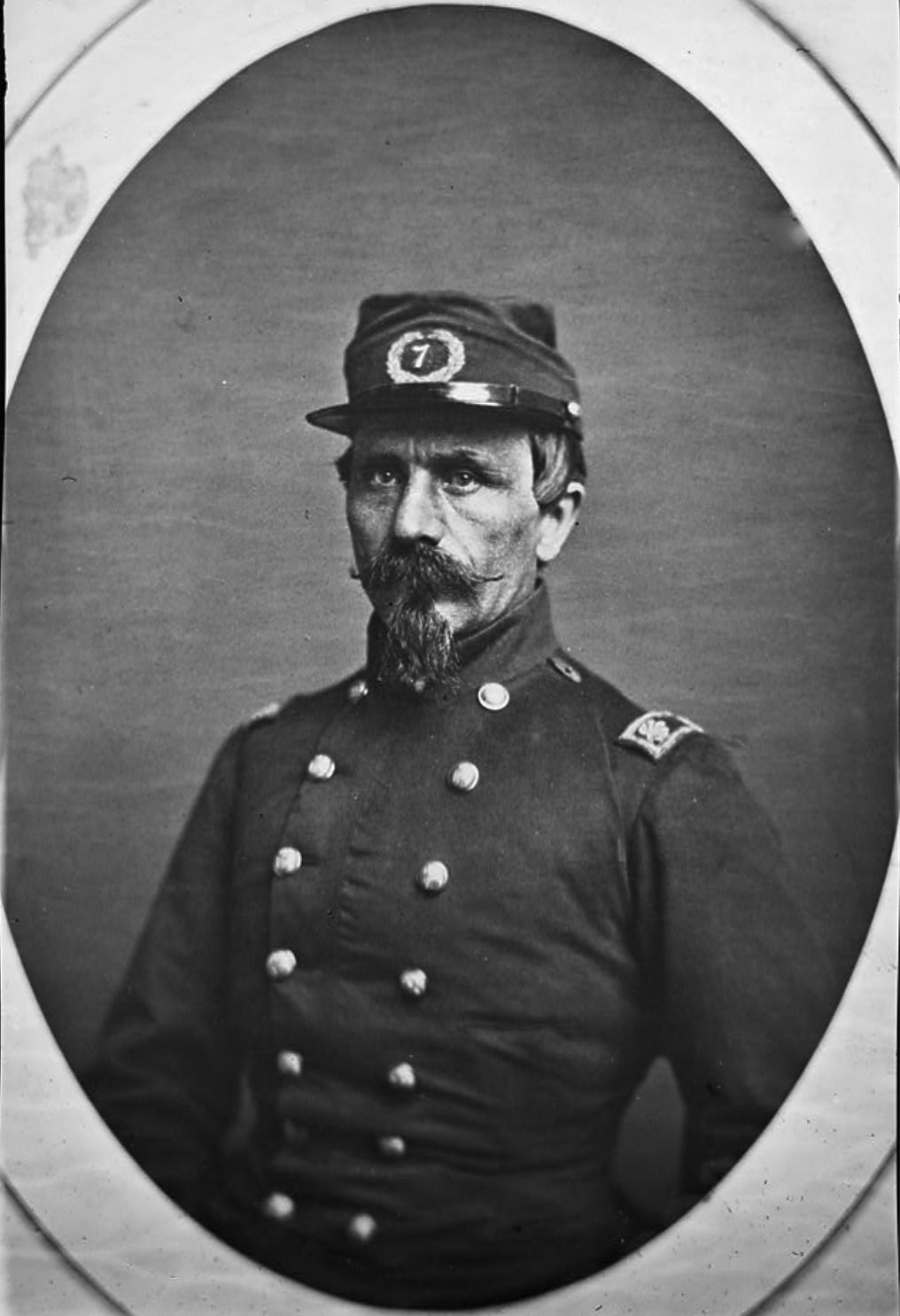
Colone J.E. Bendix, 10th New York Infantry. Pictured in his previous command with the 7th New York
As Longstreet prepared to attack, Colonel Gouverneur K. Warren marched his two regiment brigade down the Warrenton Pike to its intersection with Lewis Lane, where Lieutenant Charles E. Hazlett had requested infantry support for his Battery D of the 5th United States Artillery. Warren’s brigade was the 3rd Brigade of the 2nd Division of the 5th Corps, Army of the Potomac, and consisted of the 5th and 10th New York Infantry regiments.
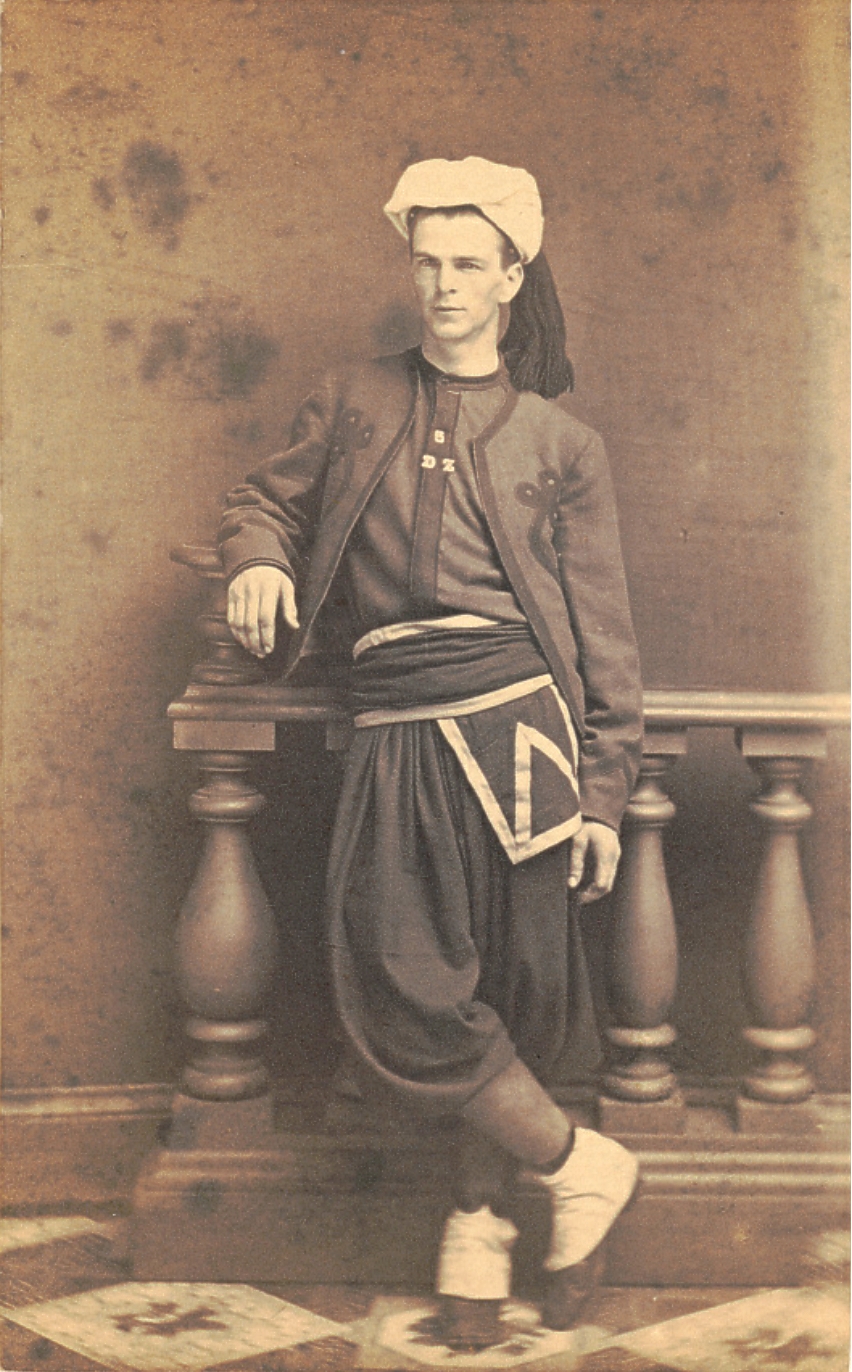
Both of these regiments were Zouave regiments with colorful and distinctive uniforms inspired by those worn by French Zouave troops. The 5th New York was also known as Duryee’s Zouaves, named after the unit’s first commander, Colonel Abram Duryee. (Duryee had been promoted to Brigadier General and commanded a brigade in the Army of Virginia at 2nd Bull Run. Captain Cleveland Winslow was in command at 2nd Bull Run.). The 10th New York, under Colonel John E. Bendix, was also known as the National Zouaves. Both regiments were veteran units that had seen a lot of action.
Warren placed six companies of the 10th New York along Lewis Lane, with the other three companies behind them in support. The 5th New York deployed along some higher ground behind the 10th. Both regiments were on the left of Hazlett’s artillery.
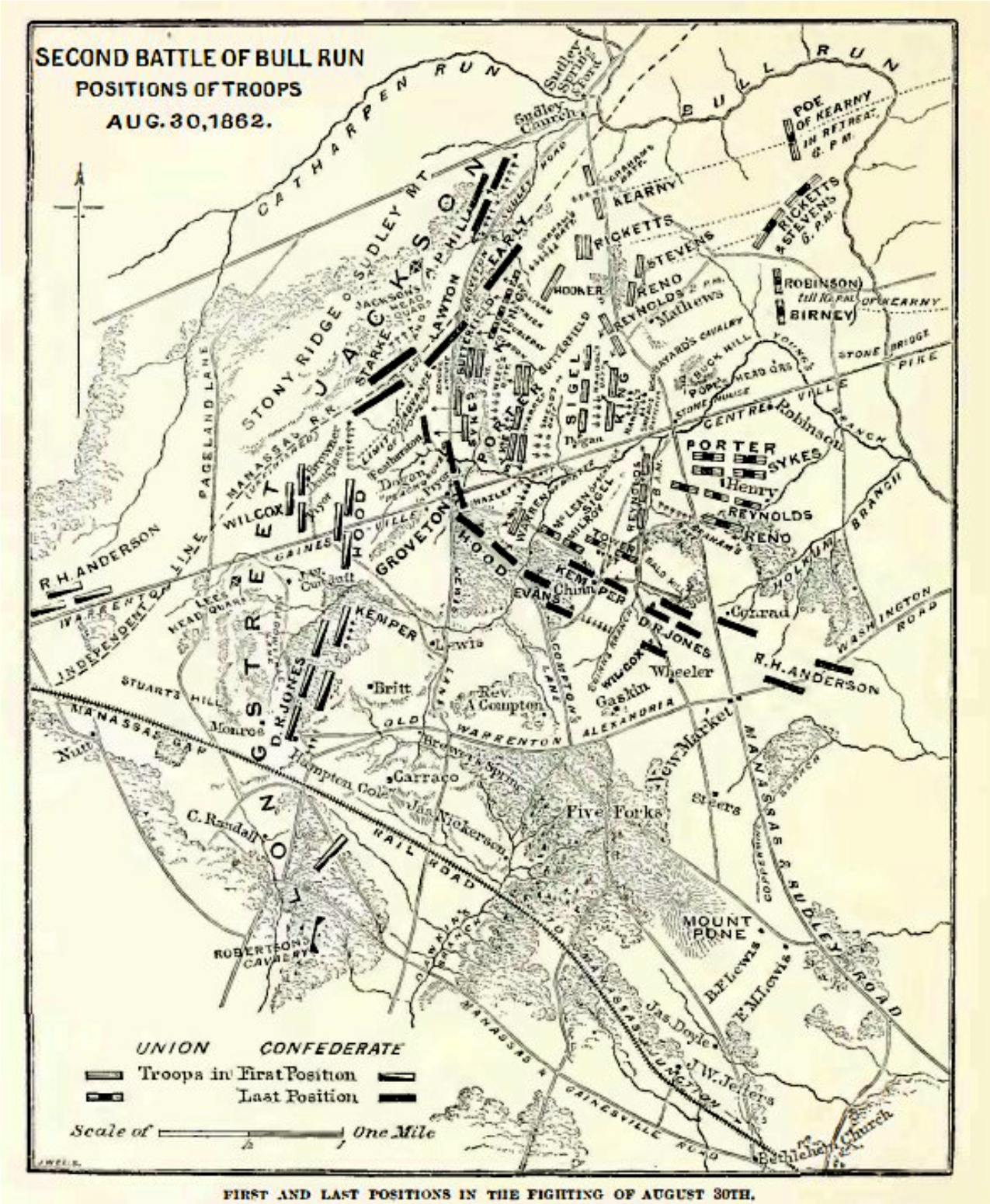
Map of Second Battle of Bull Run. Warren and Hazlett positions are to the right of Groveton
The 4th and 5th Texas, 18th Georgia, and Hampton’s Legion of Brigadier John Bell Hood’s Brigade attacked the 10th New York, with the 5th Texas, on the Confederate right, firing into the New Yorkers’ flank and rear. While the Federals tried to stem the tide, the onrushing Confederates and their superior numbers forced the New Yorkers to retire.
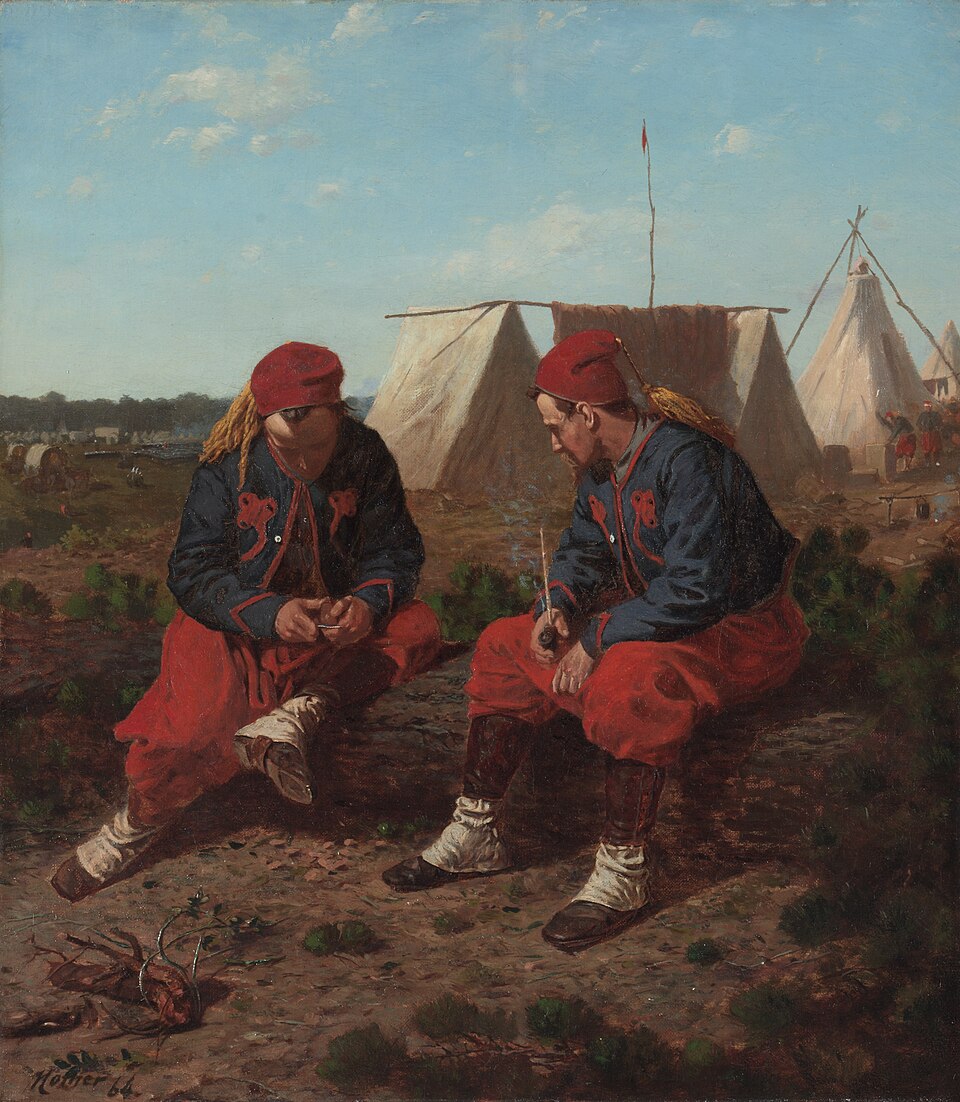
The Brierwood Pipe by Winslow Homer, with members of the 5th New York in Zouave uniforms
A member of the 5th New York recalled what happened:
Unidentified Soldier of 5th New York Infantry in Zouave uniform
The balls began to fly like hail from the woods, and the Texans were yelling like fiends; their fire directly increasing into one unceasing rattle, the air was full of deadly missiles; it was a continual hiss and sluck, the last sound telling that the bullet had gone into some man’s body. On account of the companies of the Tenth who were in front of the left wing, and who had not all got away from their front, the Fifth returned fire with difficulty, and that only by obliquing their aim, but Company I, on the extreme left, with their Sharp’s rifles, and G Company, were doing well…
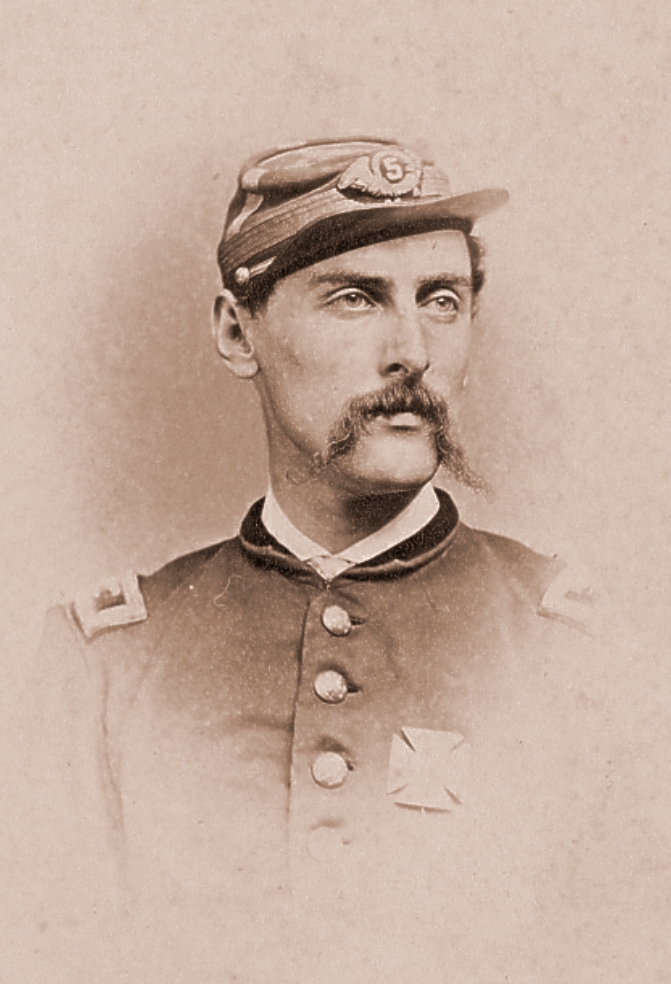
Cleveland Winslow 5th New York Infantry
The Tenth having thus been surprised by overwhelming numbers, without any warning, were forced to fall back to save themselves from annihilation or capture…they suffered a loss in a few short minutes, killed, wounded, and missing, of one hundred and fifteen…
But not withstanding the desperate situation…and their own men falling like autumn leaves, not an able man in the Fifth left the ranks, and the regiment stood like a stone wall…
All along the line the fire was murderous; the enemy were on the front and flanks, and were pouring in a terrible cross fire on the men…Captain Winslow, in command of the regiment, who was acting nobly, fell with his horse, which had received seven wounds, but fortunately the brave Winslow was spared…
All hope having vanished, and being without officers, the remnant of the once proud regiment broke and ran for their lives. They were nearly annihilated, but not conquered or disgraced…Their heroic stand had not been in vain. Butterfield on the right had been enabled to withdraw, as well as Hazlett’s battery…
The Confederates came charging on, a division strong…they were pouring in their deadly fire at short range, picking out their victims as they ran down the slope to the brook; men were falling on all sides, canteens were struck and flying to pieces, haversacks cut off, rifles knocked to pieces, and still the enemy came on and swept everything before them.
Hazlett’s battery was saved when Private James Webb saw that the Confederates of the 1st Texas Infantry were closing in on the guns. Under heavy fire, Webb returned to Hazlett’s position to warn him. “The bullets whistled all around me, but I kept on, for I was in a place where I could not stop.
“I finally reached the battery, which was about 600 feet away from us, and managed to say to Lieutenant Hazlett:
‘The Rebs are on your front and rear!’
“He looked around, and seeing his danger, at once ordered the battery to limber up to the rear, and away we went to the Warrenton Turnpike.”
Webb was shot through the side on the way back, but survived. He was awarded the Medal of Honor for his action.
Here’s an extract from Colonel Warren’s after action report:
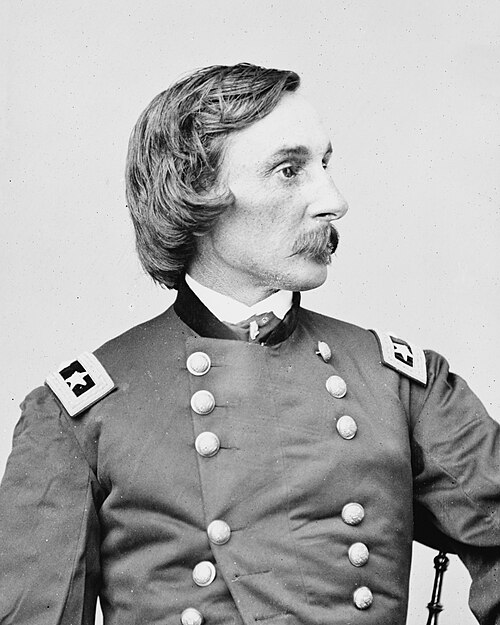
Col. Gouvernor K. Warren, pictured after promotion to General
The enemy advanced with rapidity upon my position, with the evident intention of capturing Hazlett’s battery. The Tenth New York was compelled to fall back, scarcely arriving at the position held by the Fifth New York before the enemy, and in such a manner as to almost completely prevent the Fifth from firing upon them. While I was endeavoring to clear them from the front the enemy in force opened fire from the woods on the rear and left flank of the Fifth with most fearful effect. I then gave the order to face about and march down the hill, so as to bring the enemy all on our front, but in the roar of musketry I could only be heard a short distance. Captain Boyd, near me, repeated the command, but his men only partially obeyed it. They were unwilling to make a backward movement. He was wounded while trying to execute it. Adjutant Sovereign carried the order along the line to Captain Winslow, commanding the regiment, and to the other captains, but was killed in the act. Captain Winslow’s horse was shot. Captain Lewis, acting field officer, was killed. Captain Hager was killed. Captains McConnell and Montgomery were down with wounds, and Lieutenants Raymond, Hoffman, Keyser, and Wright were wounded. Both color-bearers were shot down, and all but four of the sergeants were killed or wounded.
Before the colors and the remnant of the regiment could be extricated 298 men of the Fifth and 133 of the Tenth New York were killed or wounded.
In the Tenth New York Lieutenant Hedden was killed, and Captain Dimmick, Lieutenant Dewey, Lieutenant Mosscrop, and Lieutenant Culhane wounded. The colors of both regiments were brought off, and the batteries we were protecting were withdrawn.
The 5th New York casualties were 79 killed, 170 wounded, and 48 missing or captured. The 10th New York listed 23 killed, 65 wounded, and 27 missing or captured. The 2nd Battle of Bull Run, or Second Manassas, was a decisive Confederate victory. Colonel Warren would be promoted to General in September and 10 months later would have perhaps his finest, and most famous, hour organizing the successful defense of Little Round Top at the Battle of Gettysburg.
Sources:
Camp and Field Life of the Fifth New York Infantry by Alfred Davenport
Generals in Blue: Lives of the Union Commanders by Ezra J. Warner
The Maps of Second Bull Run by Bradley M. Gottfried
Official Records of the Union and Confederate Armies in the War of the Rebellion Series I, Volume 12 Part 2
The Second Battle of Bull Run by John Pope. In Battles and Leaders of the Civil War, Volume II. Edited by Robert U. Johnson and Clarence C. Buel
Services of the Tenth New York Volunteers in the War of the Rebellion by Charles W. Cowtan
Amazon affiliate links: We may earn a small commission from purchases made from Amazon.com links at no cost to our visitors. For more info, please read our affiliate disclosure.


